
Intentions Over Resolutions: Choosing Curiosity Over Pressure This Year
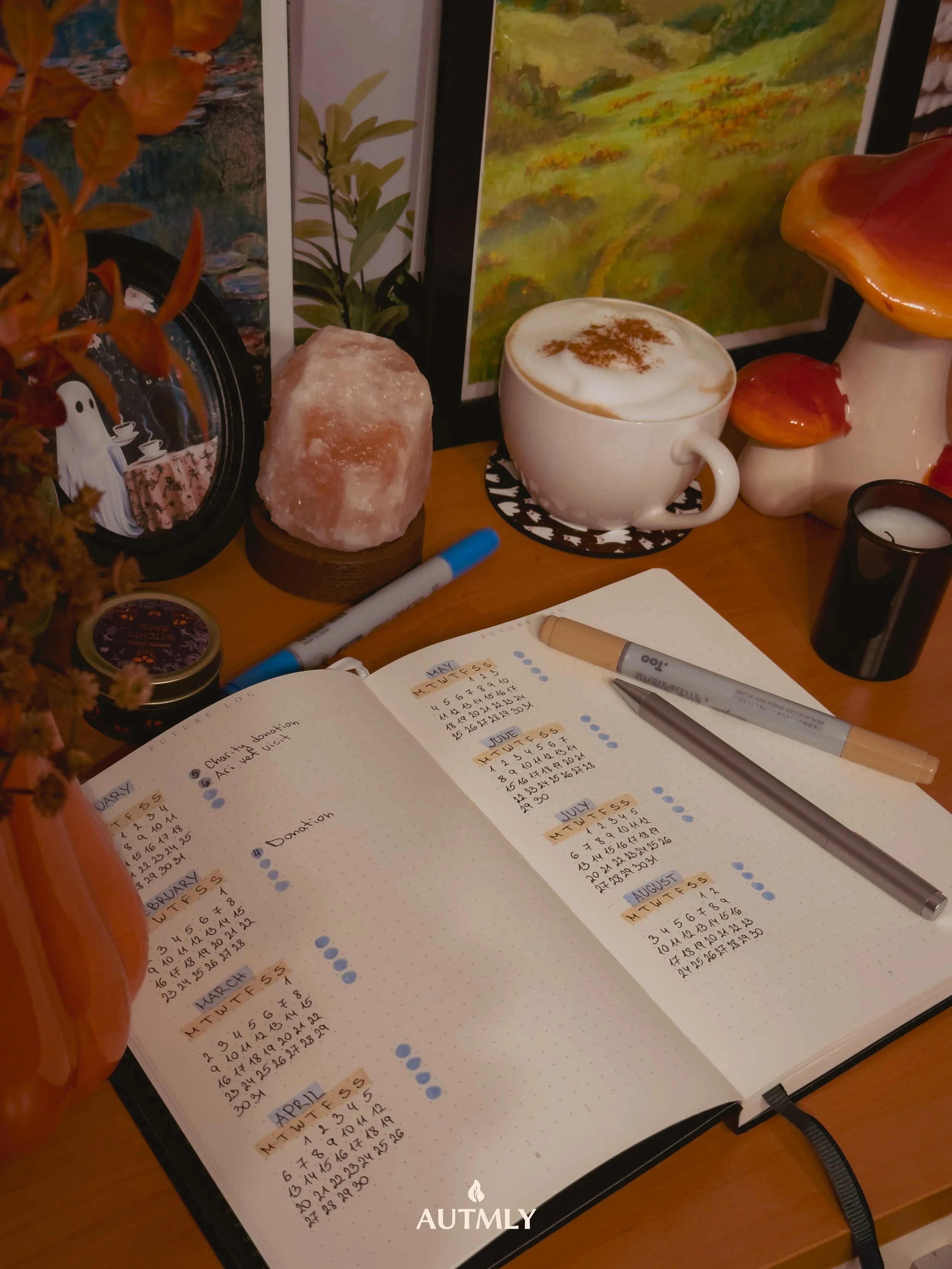
As we let go of the past year and get excited for the new beginning, we might start making ambitious resolutions that will finally transform our lives. But if you're anything like me, you've noticed a pattern: those grand declarations often start to feel like a heavy weight rather than an exciting opportunity. The gym membership goes unused by February, the journal sits empty, and we're left feeling like we've failed before we've even really begun.
But here's what I've been thinking lately. Maybe the problem isn't us. Maybe it's the way we've been thinking about change itself.
The Pressure
I've found some interesting research which shows that around 55% of people who make New Year's resolutions consider themselves successful at the one-year mark. Although, that by itself doesn't sound terrible, it also means nearly half of us are setting ourselves up for what feels like failure. And the way we typically frame resolutions doesn't help.
Traditional resolutions come with built-in pressure. They're often phrased as absolutes: "I will exercise every day," "I will never eat sugar again," "I will be more productive." These declarations feel like commitments carved in stone, and when we inevitably stumble (because we're human), we tend to see it as a personal failing rather than just part of the process.
Research on expressive writing and narrative practices shows that reflecting creatively can reduce distress and increase insight, particularly when people focus on meaning rather than performance. So what if we approached our desires for change differently?
The Experiment Mindset
What if your "resolutions" were actually just experiments? Experiments are inherently playful and low-stakes. Scientists don't beat themselves up when an experiment doesn't yield the expected results - they learn from it and adjust. When you frame your goals like that, you're giving yourself permission to try, observe, learn, and adapt without the crushing weight of perfectionism.
Instead of saying "I will meditate every morning," you might say "I'm going to try different times and ways of meditating to see what actually fits into my life." The difference is subtle but profound. One feels like a test you can fail and the other like a genuine exploration.
The Science Behind Starting Small
Dr. BJ Fogg, a behavior scientist at Stanford who has coached over 60,000 people through his Tiny Habits method, discovered something fascinating. Lasting change isn’t driven by willpower alone, but formed when three things come together - motivation, ability, and a prompt. Making behaviors tiny (and therefore easy) is often more effective than trying to muscle through with motivation alone.
This is where the experiment mindset really shines. Instead of committing to an hour-long workout routine that feels impossible to maintain, you might experiment with just two minutes of movement after your morning coffee. Instead of trying to read half a novel by noon, you ca just read 10 pages before bed. These tiny experiments require less willpower, fit more easily into your existing life, and - most importantly - feel less like failure when you need to adjust them.
The Power of Psychological Flexibility
There’s another concept from psychology that helps explain why this approach works - psychological flexibility. At its core, it’s the ability to stay present, adapt when things change, and choose actions that align with what truly matters to you. Research consistently shows that people who practice this kind of flexibility tend to experience greater well-being.
In other words, the ability to adapt and adjust - rather than rigidly sticking to a predetermined plan - is actually better for our mental health and success. A study on New Year's resolutions found that participants with approach-oriented goals (focusing on what they wanted to do) were significantly more successful than those with avoidance-oriented goals (focusing on what they wanted to stop doing), with success rates of 58.9% versus 47.1%.
When you think of your changes as experiments, you're building in this flexibility from the start. You're not locked into one path; you're exploring possibilities.

Self-Compassion
Here’s something you might not expect: being kind to yourself plays an even bigger role in emotional well-being than flexibility alone. Being kind to yourself when things don't go as planned isn't just nice - it's actually a powerful tool for creating lasting change.
When you view your resolutions as experiments, self-compassion becomes built into the process. An experiment that doesn't work out isn't a failure - it's data. You're not a failure for trying something that didn't stick; you're a curious researcher gathering information about what does and doesn't work for you.
I think about this with my own Three Leaves Challenge that I shared with you all before. The whole point was to experiment with novelty in a no-stress way, where even the small wins get celebrated. And you know what? That permission to be imperfect, that encouragement to be gentle with myself - that's what making it sustainable and fun.
How to Transform Your Resolutions into Experiments
So how do you actually do this? Here are some practical ways to shift from pressure-filled resolutions to playful experiments:
1. Change your language.
Instead of "I will" or "I must," try "I'm curious about" or "I wonder what would happen if." This small linguistic shift can dramatically change how you feel about the process.
2. Set experiment parameters instead of rigid goals.
Rather than "exercise every day," try "For the next two weeks, I'm going to experiment with 5-minute movement breaks after lunch to see how it affects my afternoon energy."
3. Build in observation time.
Give yourself permission to simply notice what happens without judgment. Keep a simple log: What did you try? How did it feel? What got in the way? What surprised you?
4. Celebrate the act of experimenting, not just the results.
You tried something new today? That's worth celebrating, regardless of the outcome. In his Tiny Habits method, BJ Fogg emphasizes that emotions, not repetition, are what wire in habits. When you feel good about experimenting, you're more likely to keep doing it.
5. Adjust and iterate.
When an experiment doesn't work, get curious instead of discouraged. What could you change? What did you learn about yourself? What might work better?
6. Start absurdly small.
If you want to read more, start with one page. Want to eat healthier? Plan one simple homemade meal. The goal isn't to make dramatic changes right away - it's to make changes so easy that you can't help but succeed.

Permission
You don't have to overhaul your entire life this year. You don't have to become a completely different person. You don't have to keep punishing yourself with set in stone resolutions that make you feel like you're constantly falling short. Instead, you can be curious. You can experiment, learn and adjust. And through this gentler, more playful approach, you might just find that meaningful change happens more naturally than you ever imagined.
So what experiment will you try first? Maybe it's something tiny, something that makes you smile just thinking about it. Maybe it's something you've been wanting to explore but felt too scared to commit to fully. Whatever it is, approach it with curiosity and kindness. The laboratory of your life is open, and you're the lead scientist.
Remember: You're not trying to achieve perfection. You're just experimenting with what works for you. And that's not only enough - it's actually the most powerful approach you can take.
Thank you for reading and I hope I see you next time. 🍂
Keep your heart cozy - no matter the season.
——————————————————————————
Sources for this article:
Hayes, S. C., Luoma, J. B., Bond, F. W., Masuda, A., & Lillis, J. (2012). Acceptance and commitment therapy: Model, processes and outcomes. Behaviour Research and Therapy. Referenced in: Psychology Today (2024). Instead of Making Resolutions, Set Creative Intentions.
Pyszkowska, A., & Rönnlund, M. (2021). Psychological Flexibility and Self-Compassion as Predictors of Well-Being: Mediating Role of a Balanced Time Perspective. Frontiers in Psychology.
https://www.frontiersin.org/journals/psychology/articles/10.3389/fpsyg.2021.671746/full
Marshall, S. L., & Brockman, R. (2016). The Relationships Between Psychological Flexibility, Self-Compassion, and Emotional Well-Being. Journal of Rational-Emotive & Cognitive-Behavior Therapy, 34(4), 311-326.
Fogg Behavior Model. (n.d.). BehaviorModel.org.
Pennebaker, J. W., & Chung, C. K. (2011). Expressive writing: Connections to physical and mental health. In H. S. Friedman (Ed.), Oxford handbook of health psychology. Oxford University Press. Referenced in: Psychology Today (2024). Instead of Making Resolutions, Set Creative Intentions.
https://c3po.media.mit.edu/wp-content/uploads/sites/45/2016/01/PennebakerChung_FriedmanChapter.pdf
Oscarsson, M., Carlbring, P., Andersson, G., & Rozental, A. (2020). A large-scale experiment on New Year's resolutions: Approach-oriented goals are more successful than avoidance-oriented goals. PLOS ONE.