
Mary, Queen of Scots: Needlework as a Prison Survival Tactic
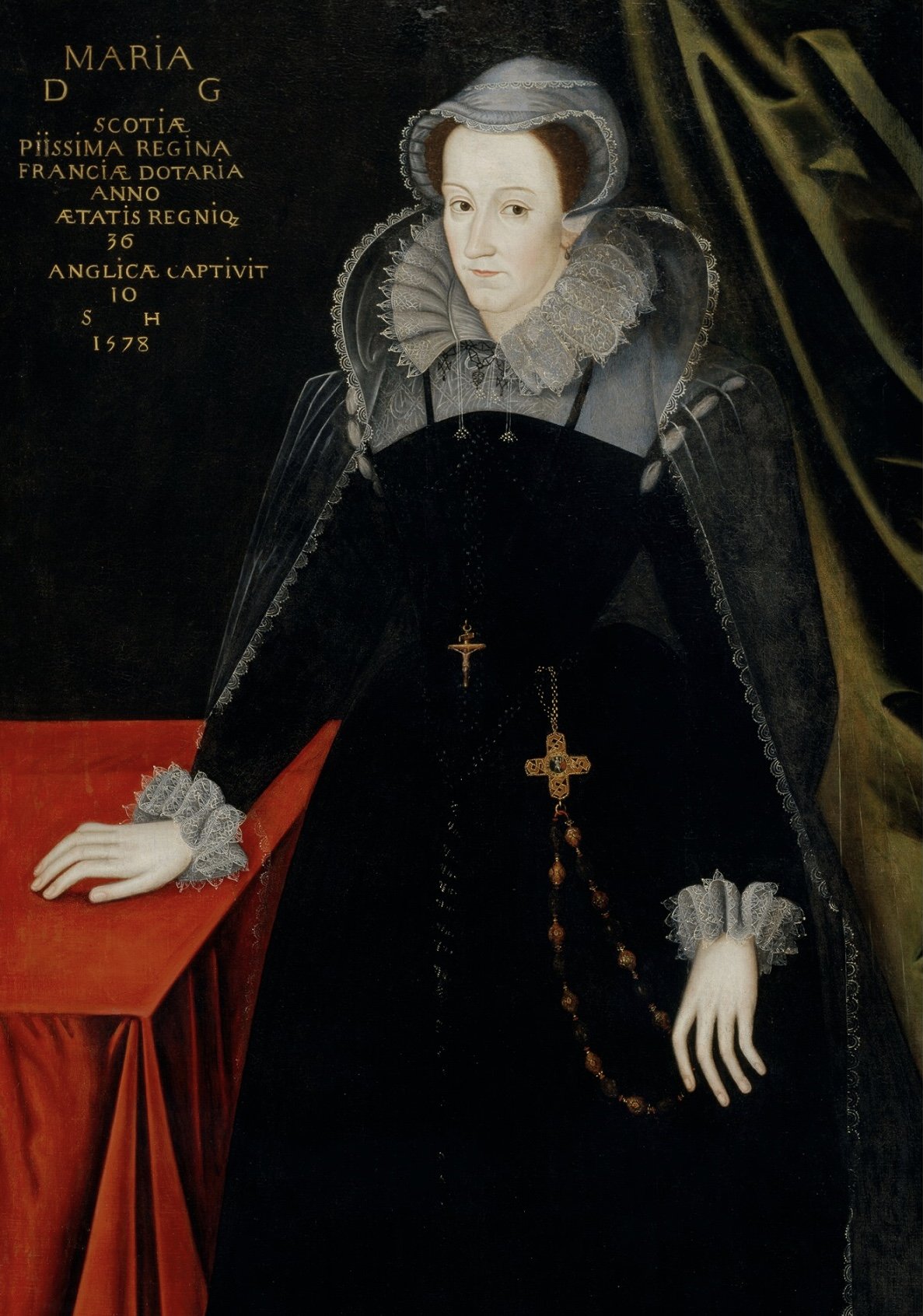
Photo: National Galleries Scotland, Public Domain, via Wikimedia Commons
A queen who stitched to survive
Mary spent nearly nineteen years as a prisoner of her cousin, Queen Elizabeth I, after fleeing to England in 1568. For most of that time she lived in the custody of George Talbot, Earl of Shrewsbury. His wife, Bess of Hardwick, was a serious needlewoman in her own right, and the two women stitched together for years.
Embroidery became one of the only things Mary could control during her captivity. She and Bess worked on panels for hours at a stretch, often using printed pattern books for inspiration. Historians describe the practice as part occupation and part genuine emotional outlet. It gave a captive queen something steady to do with her hands and her mind. Everything else about her circumstances stayed completely outside her control.
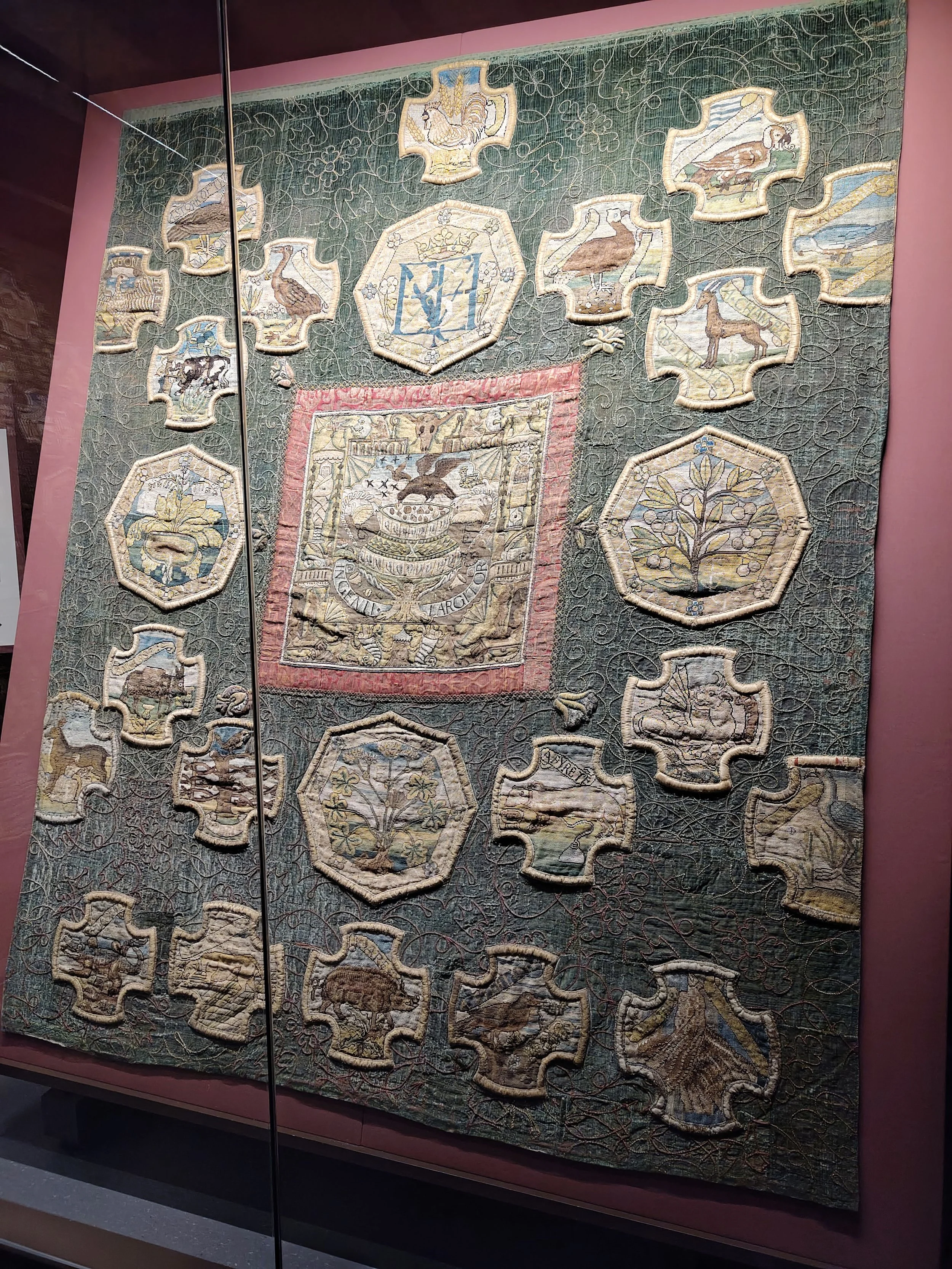
Photo: Sir Iain, via Wikimedia Commons, CC BY 4.0
The cat, the mouse, and a message you had to know how to read
The most famous surviving piece from this period is a small cruciform panel known as "A Catte." It shows a crowned ginger cat with its paw resting on a grey mouse. The scene sits on a chequered floor, worked in fine tent stitch. The design borrows from a woodcut in a sixteenth century natural history book by the Swiss naturalist Conrad Gesner.
Most historians read the crowned cat as a stand in for Elizabeth and the mouse as Mary herself. It wasn't hidden text sewn into the fabric. It was allegory, not code. People who knew their emblem books and heraldry could read the image on sight, much like we'd read a political cartoon today.
That distinction matters to me. Mary wasn't concealing a secret message inside the stitches. She was making a political point in a form she was allowed to use. To anyone glancing over her shoulder, it looked like a perfectly ordinary pastime for a noblewoman with time on her hands.

Photo: Royal Collection, Public Domain, via Wikimedia Commons
A very different kind of secret
Separately, and on paper rather than fabric, Mary also used an actual cipher. Between 1578 and 1584 she exchanged encoded letters with allies in France, including the French ambassador Michel de Castelnau de Mauvissière. Her cipher swapped symbols for letters. It also used entirely separate symbols for certain names and recurring words, so even the shape of a sentence gave nothing away.
Some of these letters were intercepted at the time by Elizabeth's spymaster, Francis Walsingham. Many more simply vanished into the archives, mislabeled for centuries as unrelated sixteenth century Italian documents held in the French national library. Nobody thought to look closely at them for generations.
In 2023, three codebreakers finally cracked the cipher. The team included a cryptographer, a pianist, and a physicist, all working on the puzzle outside their day jobs. Together they identified fifty seven of Mary's letters. They combined computer analysis with slow manual decoding, a process one of them compared to solving an enormous crossword.
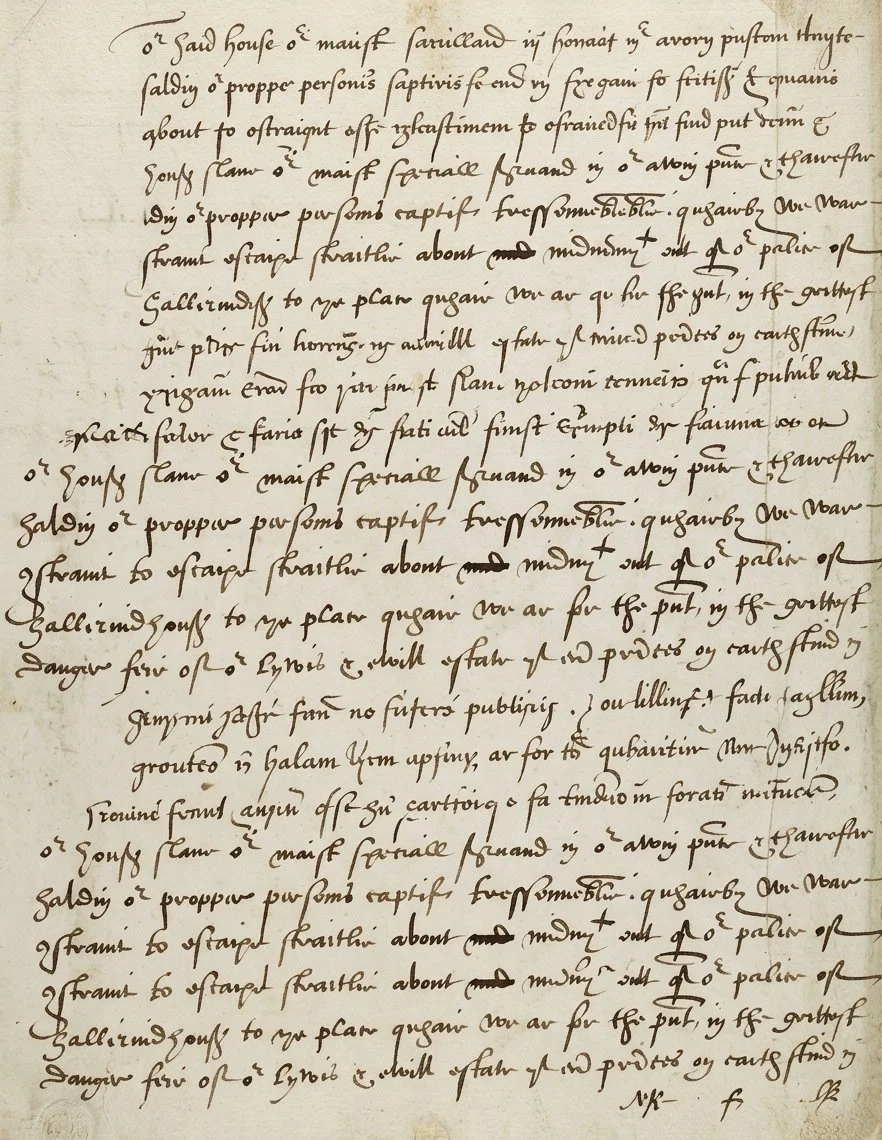
Photo: Public Domain, via Wikimedia Commons
Two threads, easy to mix up
I understand why people blend these two stories together. Both involve Mary, both involve secrecy, and both happened during the same long captivity. But they're genuinely different tools built for genuinely different purposes, and it helps to keep them separate in your head.
The embroidery was allegory, displayed openly, meant to be read by anyone who understood the symbols. The letters were true cryptography, written specifically so nobody without the key could read them at all. One was a quiet, public form of political expression and the other was an actual survival mechanism. It kept real information moving during nineteen years locked away from the people she trusted most.
I keep coming back to how resourceful both approaches were. A needle and thread became a form of speech Mary could use in front of anyone, in full view of her captors. A cipher on paper became a form of speech she had to hide completely, decoded only by strangers four centuries later. Between the two, she found ways to keep talking for almost two decades, even when she had every reason to stay silent.
A needle has always been capable of saying more than it looks like it's saying. I think that's part of why I fell for this craft, long before I knew anything about queens or cryptographers. It still surprises me how much room a small piece of fabric leaves for saying something real.
Follow along for more stitched-in history and happy stitching!