
Are You Using the Wrong Number of Threads?
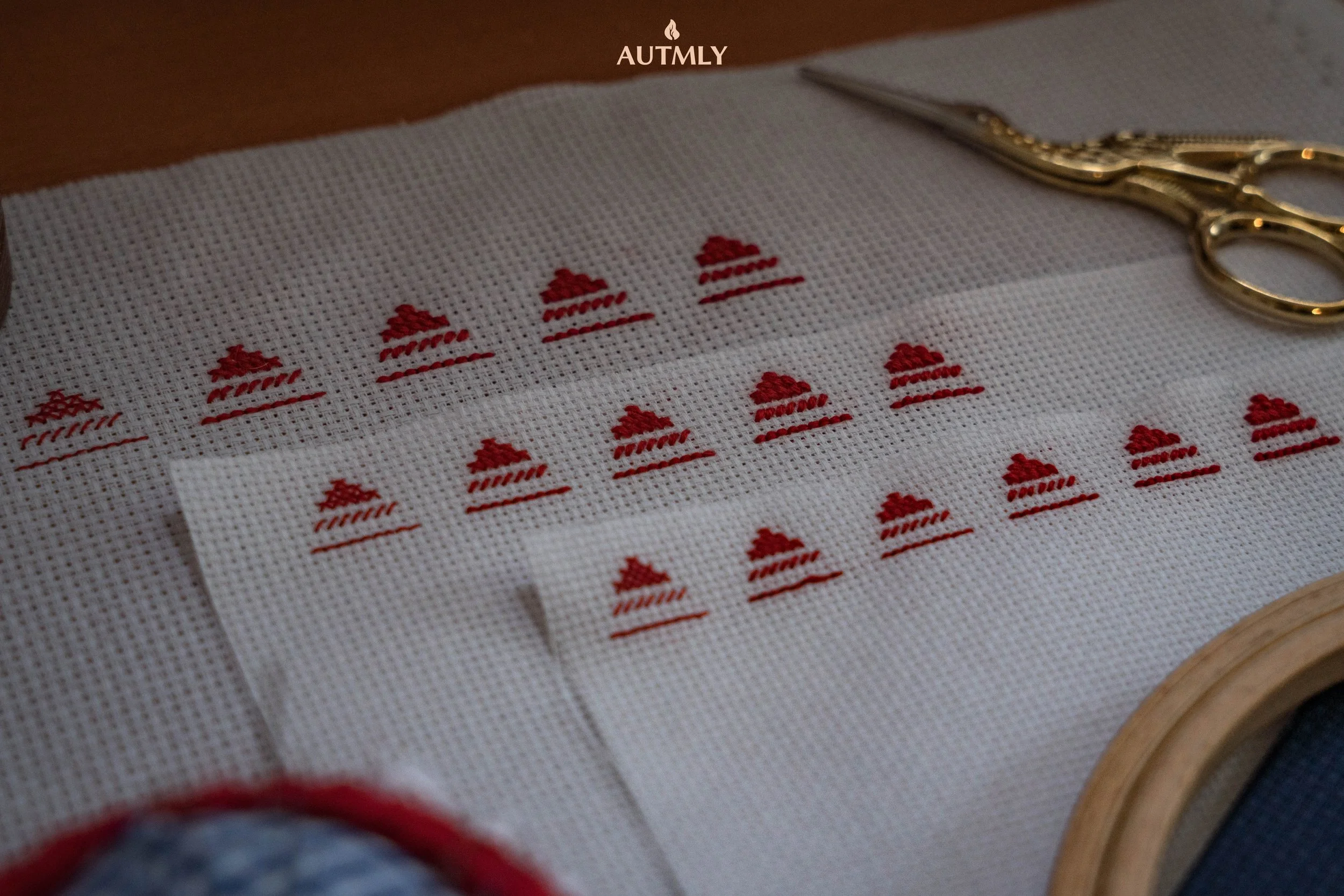
©All Rights Reserved by Autmly, original image
There is a moment in my cross stitching journey I remember well. I just finished a piece, I looked at it, and something felt slightly off. Not wrong, exactly, but not quite what I pictured either. The colors were right, the pattern was followed to the symbol, and yet the whole thing looked a little heavy and muddy.
If you’ve ever found yourself in this situation, nine times out of ten, the culprit is the number of strands.
It sounds like such a small thing. One thread more or less, how much could it really matter? The answer, as it turns out, is a lot. Strand count is one of the most important decisions in cross stitch, and once you understand what it actually does, you will never look at a project the same way again.
First, some basics about floss
Standard embroidery floss (the kind that comes wound in a skein, most commonly from brands like DMC or Anchor) is not a single thread. It is actually six individual strands twisted loosely together into one bundle. Before you stitch, you separate the number of strands your pattern calls for, then recombine them to thread your needle.
Most patterns will specify a strand count, usually tucked into the key or the introductory notes. It might say "use 2 strands over 1" or simply list the strand count alongside the color codes. Most beginner stitchers follow this instruction faithfully without ever asking why. And that is completely fine, until the day you want to go off-pattern, adapt a design, or troubleshoot a piece that is not turning out as expected.
Understanding the why behind the number gives you a tool, not just a rule.
What happens when you use more strands
More strands (typically three, four, or all six) produce a bold, full, richly textured result. The stitches sit higher on the fabric, catching the light and creating visible texture. Coverage is quick and solid; the fabric all but disappears beneath the thread.
This makes colors read as saturated and graphic. There is no softness or ambiguity here, each X sits clearly defined against its neighbors, which gives designs a strong, confident look. Think traditional samplers, folk-art motifs, cheerful holiday pieces. The aesthetic is very much cottage-craft: warm, hearty, satisfying.
Practically speaking, more strands work beautifully on lower-count fabric like 11-count. The holes are large enough to accommodate the bulk without distorting the fabric, and the resulting stitch fills the square in a clean, satisfying way.
If you are a beginner, or if you are stitching something intended to be seen from a distance, more strands are your friend. They are forgiving of small inconsistencies in tension, and they move quickly across the fabric.
What happens when you use fewer strands
If you take the same design and stitch it with one or two strands. Something entirely different happens.
The stitches become fine, almost feathery. Instead of sitting proudly on the surface, they sink into the weave of the fabric, and the finished piece takes on a quality that is softer, quieter, more refined. Colours mix and blend where they meet, creating smooth transitions that can read almost like a painting rather than a textile.
Fine strand counts are the secret behind those breathtaking portrait and botanical cross stitch pieces you see with delicate shading and near-photographic detail. The technique is sometimes called "painted needlepoint" for good reason - with one or two strands on a high-count evenweave like 28 or 32 count, the stitches become small enough to blend visually from a few inches away, and the overall effect is genuinely painterly.
This approach asks more of the stitcher: it is slower, the individual stitches are harder to see, and consistent tension matters more because there is less thread to absorb any wobble. But the results are extraordinary, and the meditative pace of fine-count stitching has its own particular pleasure.
The fabric connection
Strand count and fabric count are inseparable. They need to be matched thoughtfully, or the work will show it.
On 14-count Aida, the most common beginner fabric, two strands will cover adequately, but three is the standard recommendation for solid areas. It fills each square completely without crowding the holes. Drop to one strand on 14-count and you will likely see the fabric showing through, giving a thin, unfinished look unless that transparency is intentional.
On higher-count fabrics like 18, 22, 25, or 28-count evenweave or linen, the holes become smaller, and you need fewer strands to fill them without the fabric puckering or distorting. Two strands on 18-count is comfortable. One or two strands on 28-count gives clean, crisp stitches. Trying to push three or four strands through 28-count fabric is genuinely difficult and results in a distorted, lumpy surface.
A useful rule of thumb: the higher the fabric count, the fewer strands you need. But always test on a spare corner before committing to a full project - your needle size, and even the brand of floss can affect how threads behave on a particular fabric.
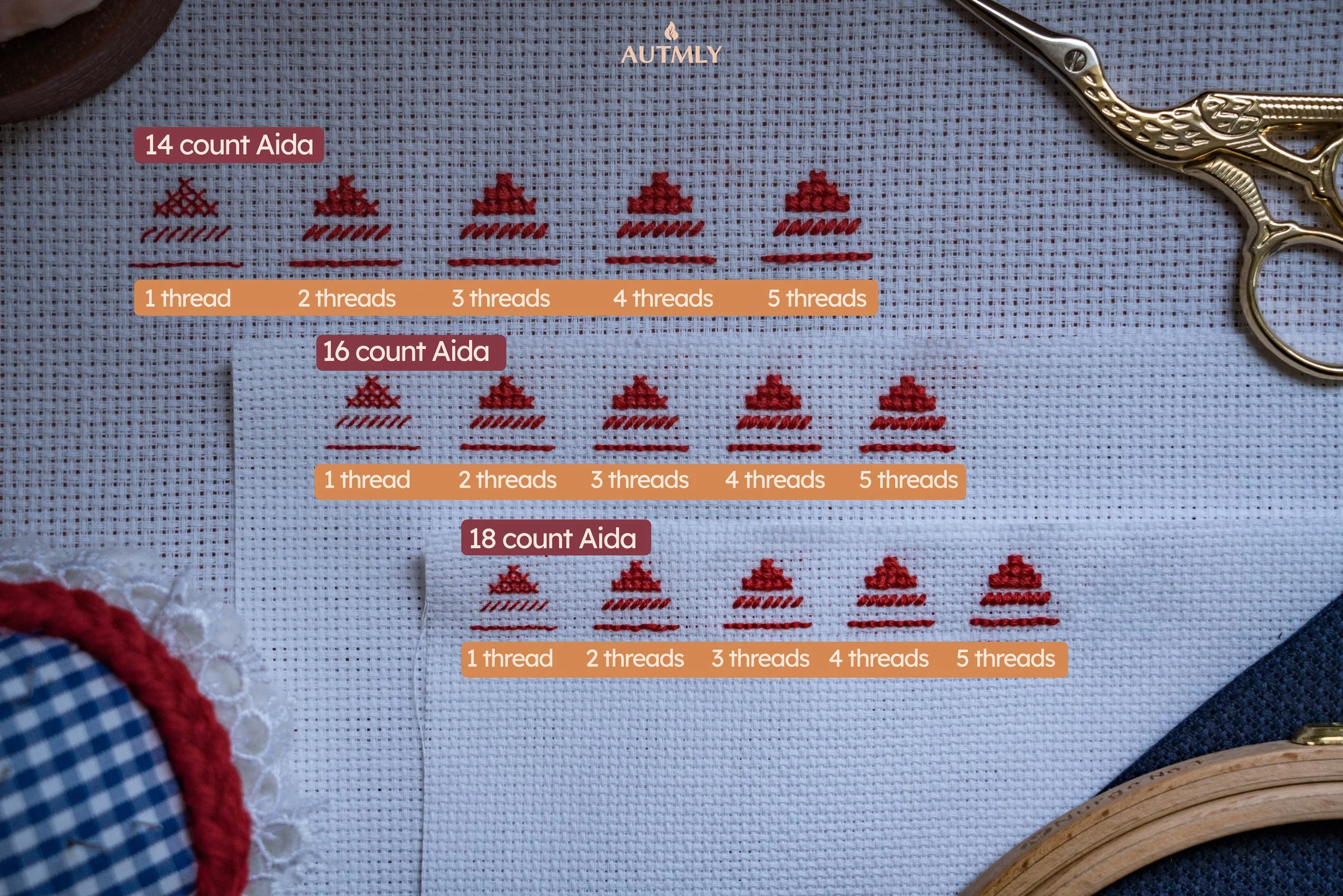
©All Rights Reserved by Autmly, original image
Mixing strand counts within one project
Here is where things get really interesting: you do not have to use the same strand count throughout an entire piece.
Many experienced stitchers deliberately vary their strand count within a single design to create dimension and visual hierarchy. The background or large filled areas might be worked in three strands for solid coverage, while fine details (facial features, stamens in flowers, text, or delicate outlines) are added with one or two strands for precision. Backstitching is almost always done in fewer strands (typically one) than the cross stitches, because its job is to define and sharpen rather than fill.
This mixed approach gives a design the best of both worlds: the visual confidence of bold coverage in the broad strokes, and the refinement of fine work in the details that the eye is drawn to first.
A reference guide to have
If you want a simple starting point before you have developed an instinct for it, here is a framework to work from:
1 strand - 28-count and above; highly detailed elements; facial features; subtle shading; achieving a painted effect.
2 strands - 18 to 28-count fabric; most botanical and portrait designs; backstitching detail on smaller projects; the everyday workhorse for intermediate-to-advanced pieces.
3 strands - Standard 14-count Aida; the go-to for most beginner and intermediate kits; solid fills on medium-scale designs.
4 to 6 strands - 11-count or lower; bold decorative motifs; very large fills; pieces designed to be seen from a distance; work where texture and visual weight are desirable.
These are guidelines, not laws. Every designer makes their own choices, and part of developing your own stitching voice is learning to trust your eye over the instruction sheet.