
What Makes DMC Thread the Industry Standard?
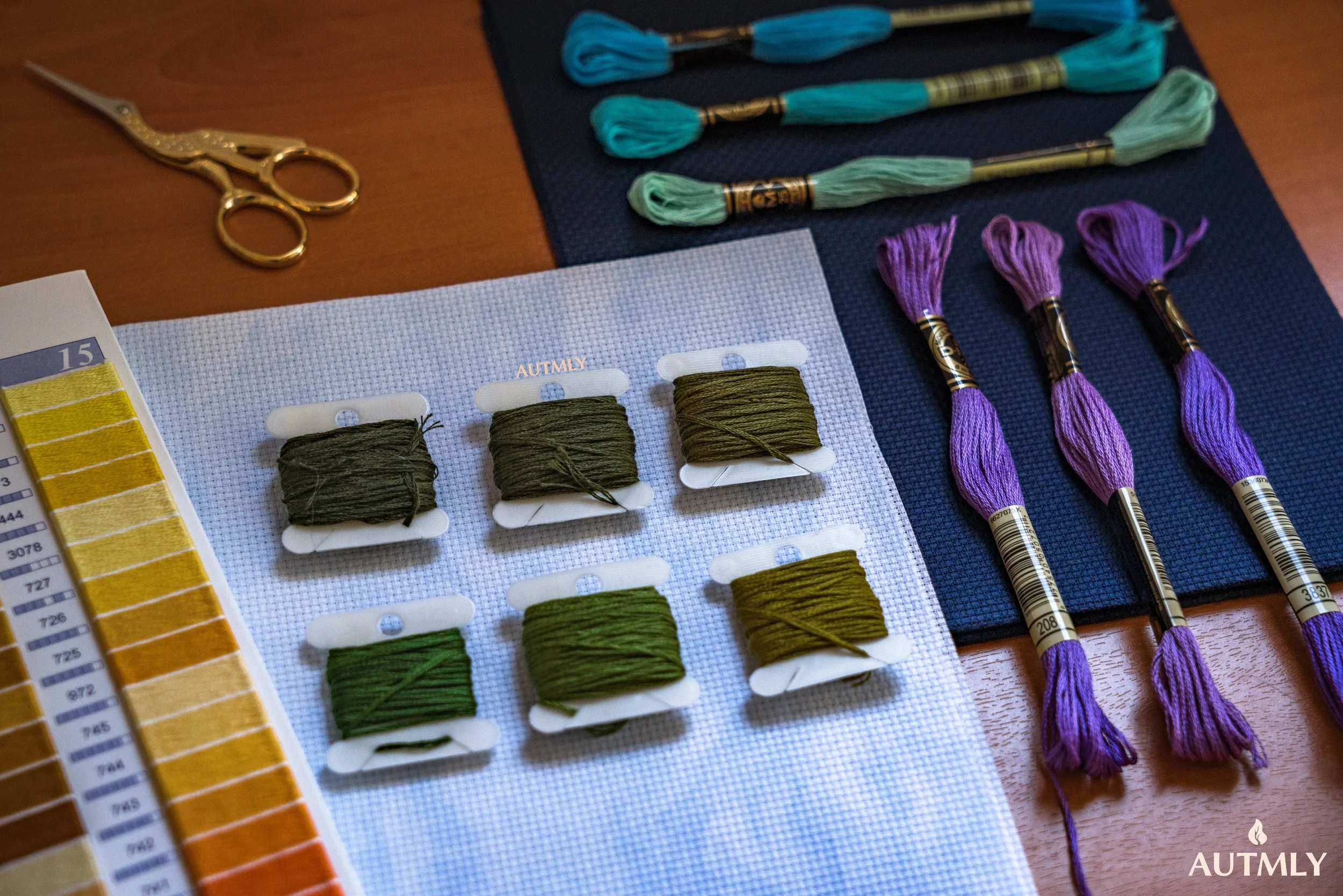
©All Rights Reserved by Autmly, original image
If you've spent any time in the world of cross stitch, you've almost certainly reached for a skein of DMC floss. But have you ever stopped to wonder why DMC has become the undisputed industry standard? It didn't happen by accident.
A History Stitched in Time
DMC's story begins in 1746 in Mulhouse, France, when Jean-Henri Dollfus founded a textile company that would eventually grow into the Dollfus-Mieg & Compagnie we know today. For nearly three centuries, the brand has been refining its craft. By the mid-19th century, DMC had already earned a reputation across Europe for producing high-quality embroidery threads, and as cross stitch spread from drawing rooms to sewing circles to living rooms around the globe, DMC came along for the ride, and eventually led the way.
That kind of longevity isn't just marketing. It's institutional knowledge, hard-won quality control, and a brand that has simply had more time than almost anyone else to get it right.
The Color System That Changed Everything
What I personally find impressive about DMC is the color numbering system. With over 500 colors (and growing), each assigned a unique number, DMC created something invaluable: a universal language for embroiderers.
When a pattern designer in Oslo calls for DMC 3750, a stitcher in Sydney knows exactly which shade of dark antique blue to reach for. That standardization has made pattern sharing, online communities, and commercial design possible in a way that simply wouldn't exist without a common reference point. Rival brands have largely had to follow suit. Many of them now publish DMC conversion charts which speaks volumes about who set the benchmark.
The color range itself is breathtaking: subtle gradients between neighboring numbers, specialist variations like Light Effects (like metallic threads), Color Variations (hand-dyed-style gradients), and Coloris (multi-color floss), all designed to slot seamlessly into the core range.
Quality You Can Feel
There's a tactile reason stitchers are loyal to DMC, and it comes down to the thread itself. DMC stranded cotton is:
Mercerised - treated with caustic soda under tension to give the fibres a smooth, rounded surface that catches the light beautifully and resists pilling.
Colourfast - the dyes are set to withstand washing, meaning your finished piece won't bleed or fade over time.
Consistent - a skein of DMC 321 bought today will match one bought five years ago. For stitchers working on long-term projects or replacing a lost skein mid-project, this consistency is priceless.
Easy to work with - the six strands separate cleanly without tangling, the thread glides through fabric with minimal friction, and the twist holds up well over repeated passes through the needle.
These are not small things. Every one of those qualities makes the stitching experience more enjoyable and the finished result more polished.
The Ecosystem Built Around It
One of the most powerful forces keeping DMC at the top is the sheer weight of the ecosystem that has grown around it. Virtually every commercially published cross stitch pattern in the world is written in DMC colour numbers. Stitching software like Pattern Keeper and Pic2Pat output DMC codes as their default. Online palettes, color conversion tools, and community databases are all built on the DMC system.
This creates a self-reinforcing cycle: designers use DMC because stitchers have it; stitchers buy DMC because patterns call for it; patterns call for DMC because it's the standard. Breaking into that loop as a competitor is an enormous challenge, and very few brands have managed it at scale.
Accessibility and Availability
DMC thread is sold in craft stores on virtually every continent. From large chains to independent needlework shops, online marketplaces, and even some supermarkets - DMC is there. That accessibility matters enormously, especially for newer stitchers who may not yet know specialist retailers or want to shop locally.
The price point is also carefully positioned: affordable enough for beginners buying their first few skeins, but perceived as quality enough that experienced stitchers don't feel they're compromising. At roughly €1–2 per skein in most markets, it sits in a sweet spot that makes stocking a full palette achievable over time.
The Community Seal of Approval
Perhaps the most enduring reason DMC holds its position is simpler than any of the above: the cross stitch community trusts it. Trust accumulated over generations of stitchers is not easy to earn and nearly impossible to replicate quickly. When beginners ask for advice in Facebook groups, Reddit threads, or YouTube comment sections, the answer is almost always the same: start with DMC. That word-of-mouth recommendation, passed from experienced stitcher to newcomer in thousands of conversations every day, is worth more than any advertising campaign.
Does That Mean It's Perfect?
Of course not. No brand is. Some stitchers find certain DMC reds prone to fading, others prefer the sheen of Anchor or the hand-dyed depth of independent dyers more. The world of embroidery thread is rich and varied, and there's genuine joy in exploring beyond the DMC palette.
But "the standard" was never about being the only option, it's about being the foundation everyone builds from. DMC earns that role through history, consistency, a masterful color system, and the trust of a global community of stitchers.
Next time you pull a skein from your stash, it's worth appreciating just how much went into making that simple length of cotton the backbone of an entire craft.
P.S. - If you’re looking for an easy way to keep track of your DMC thread inventory, go to the Resources page and download the FREE Excel sheet I made exactly for that 🧵✅