
Fabric Comparison for Beginners: Aida vs. Linen vs. Evenweave
©All Rights Reserved by Autmly, original image
The world of cross stitch fabric can be a vast one. Especially if you’re just starting out and trying to understand the materials. Tightly woven, loosely woven, stiff, drapey, white, cream, ivory, and everything in between. It can feel overwhelming, I know it from experience. The good news is that there are really only three fabric families you need to understand: Aida, linen, and evenweave. Each has a distinct personality, and once you know them, choosing becomes instinctive.
A quick look at each fabric
©All Rights Reserved by Autmly, original image
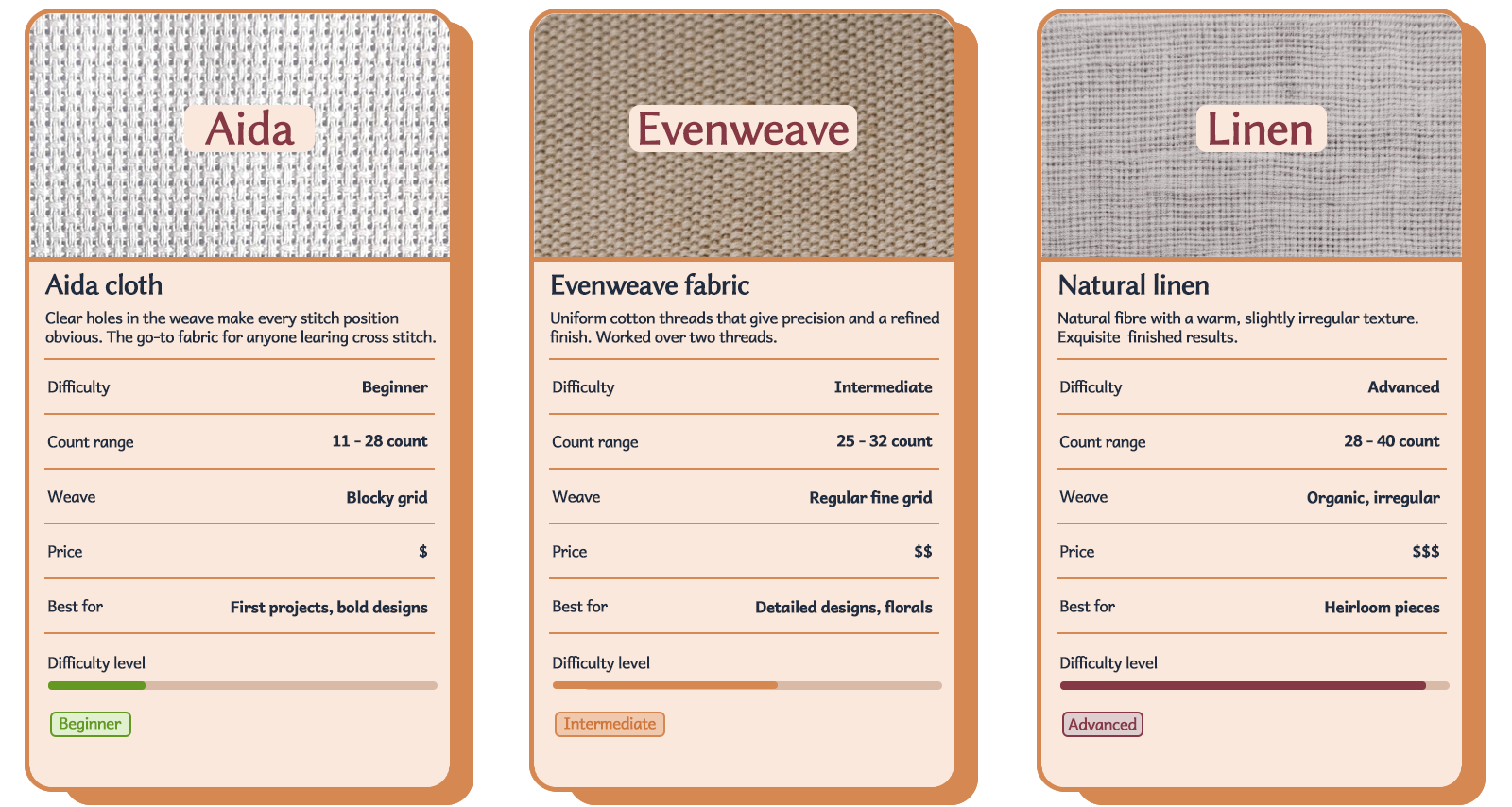
Aida: the beginner's best friend
Aida is the fabric most stitchers start on, and for a good reason. It's woven with a distinctive blocky grid structure that makes each individual stitch hole immediately visible to the eye. You can see exactly where your needle should go without counting or squinting, which dramatically reduces the most common beginner frustration: losing your place.
It's sold by "count," meaning the number of stitches per inch. 14-count Aida is the universal starting point with holes that are just large enough to be comfortable without making the fabric feel coarse. 11-count is even chunkier and perfect if you're stitching with young children or have limited eyesight. 18-count and above start to feel more delicate and are better suited to intermediate stitchers.
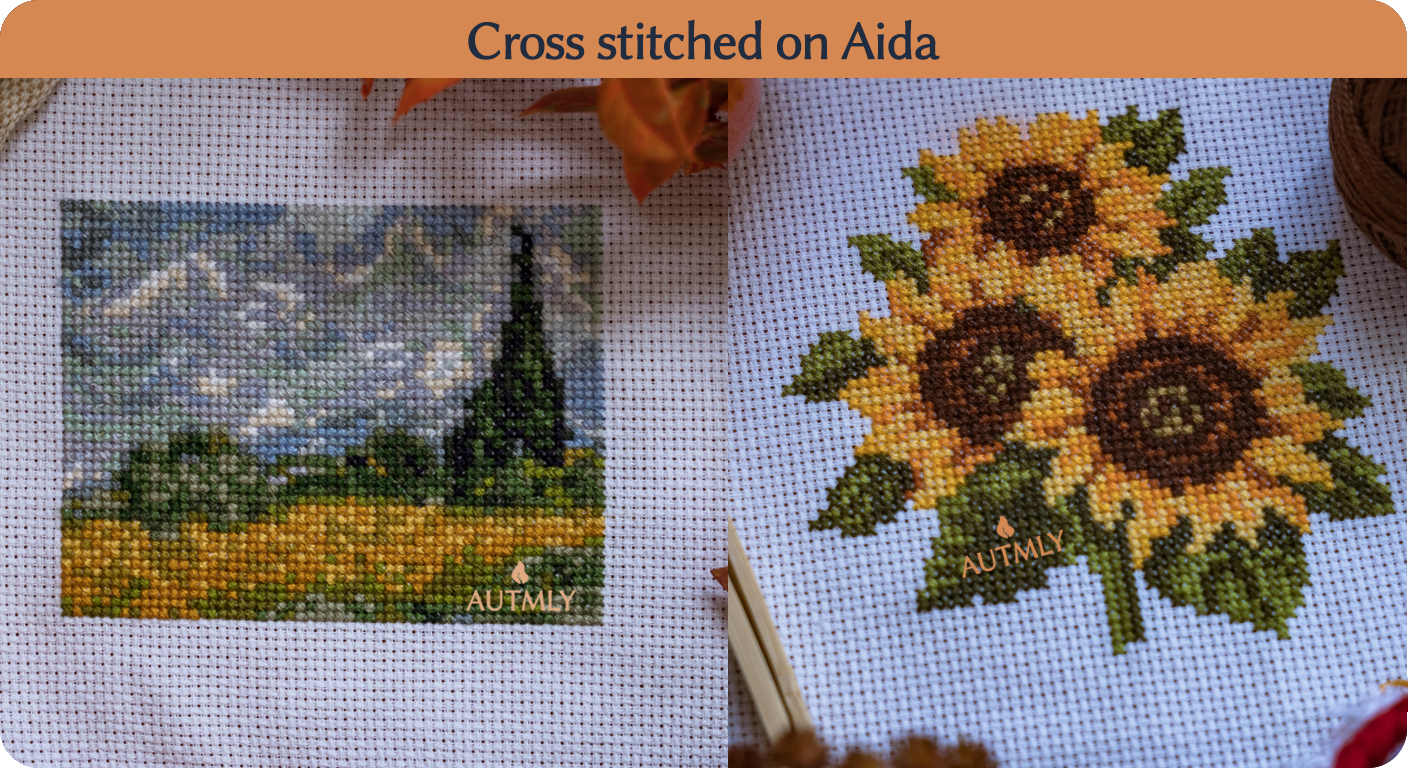
What finished Aida looks like
Aida has a noticeably "blocky" quality up close. The woven grid is visible between stitches, and the fabric itself tends to feel stiffer than linen or evenweave. From a distance, however, a well-stitched Aida piece looks polished and clean. It's an excellent vehicle for bold, graphic designs, pixel-art styles, character portraits, and sampler alphabets all sing on Aida.
©All Rights Reserved by Autmly, original image
Beginner tip: Start with white or pale cream 14-count Aida and a simple pattern under 50 stitches wide. The large holes make it easier to see and re-count if you go off-track. Once you finish one project, you'll understand everything about counting that took other stitchers months to figure out.
Linen: the heirloom standard
Linen has been used for embroidery for centuries, and that’s not just a coincidence. The fabric has an organic warmth that synthetic and cotton fabrics simply cannot replicate. It’s Slightly irregular, naturally textured, and aged-looking even when brand new. Finished pieces on linen have a depth and authenticity that makes them look genuinely antique, which is exactly why so many designers of folk-art and botanical patterns specifically call for it.
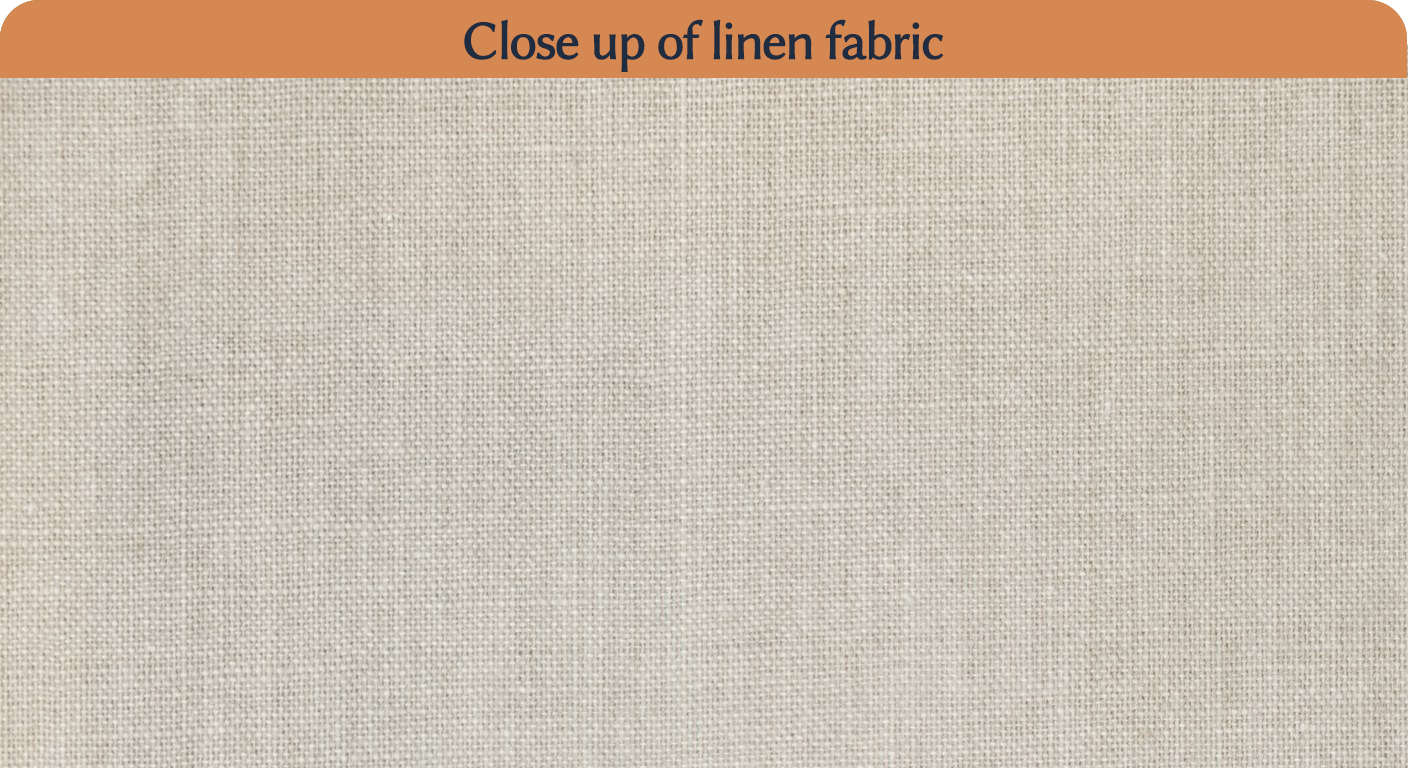
Photo by Annie Spratt on Unsplash
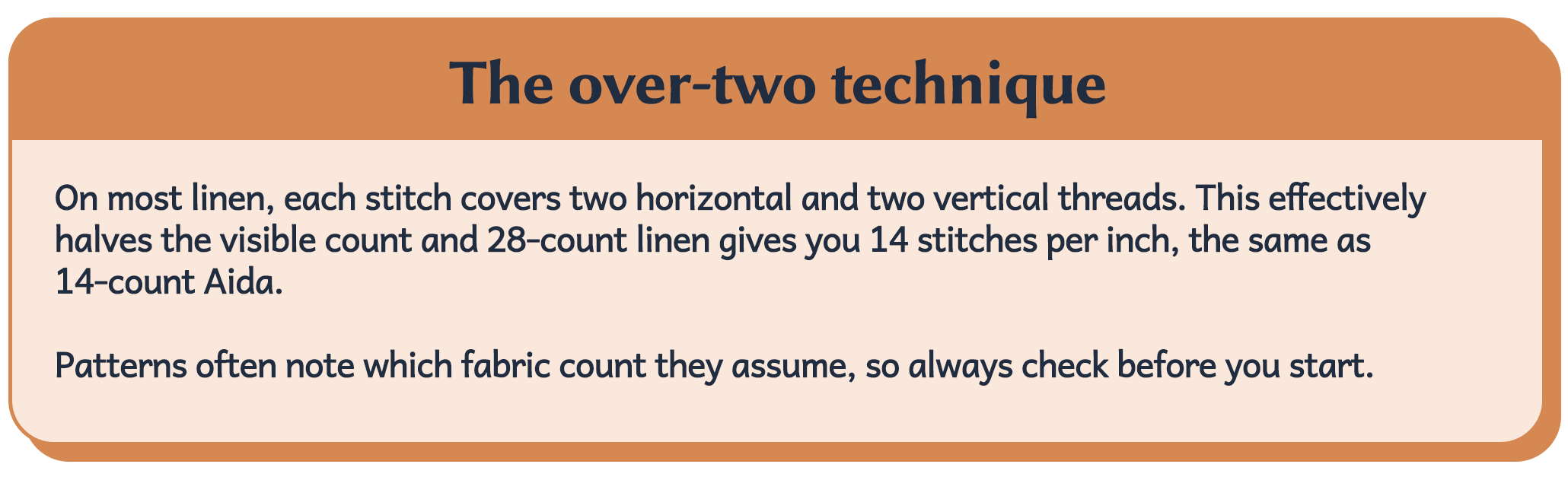
The key challenge with linen is that its threads are not uniformly sized. Because it's a natural fiber, individual threads vary slightly in thickness. This is what gives linen its beautiful, organic character but it also means there are no obvious "holes" to guide your needle. You work over two threads at a time (a technique called "over two"), using the thread count to count your position rather than visible holes.
The irregular weave means counting can be trickier, and it's easy to accidentally split a thread with your needle if you're not paying attention. For these reasons, linen is best approached after you're comfortable with evenweave but the payoff in finished appearance is exceptional.
©All Rights Reserved by Autmly, original image
Evenweave: the happy middle ground
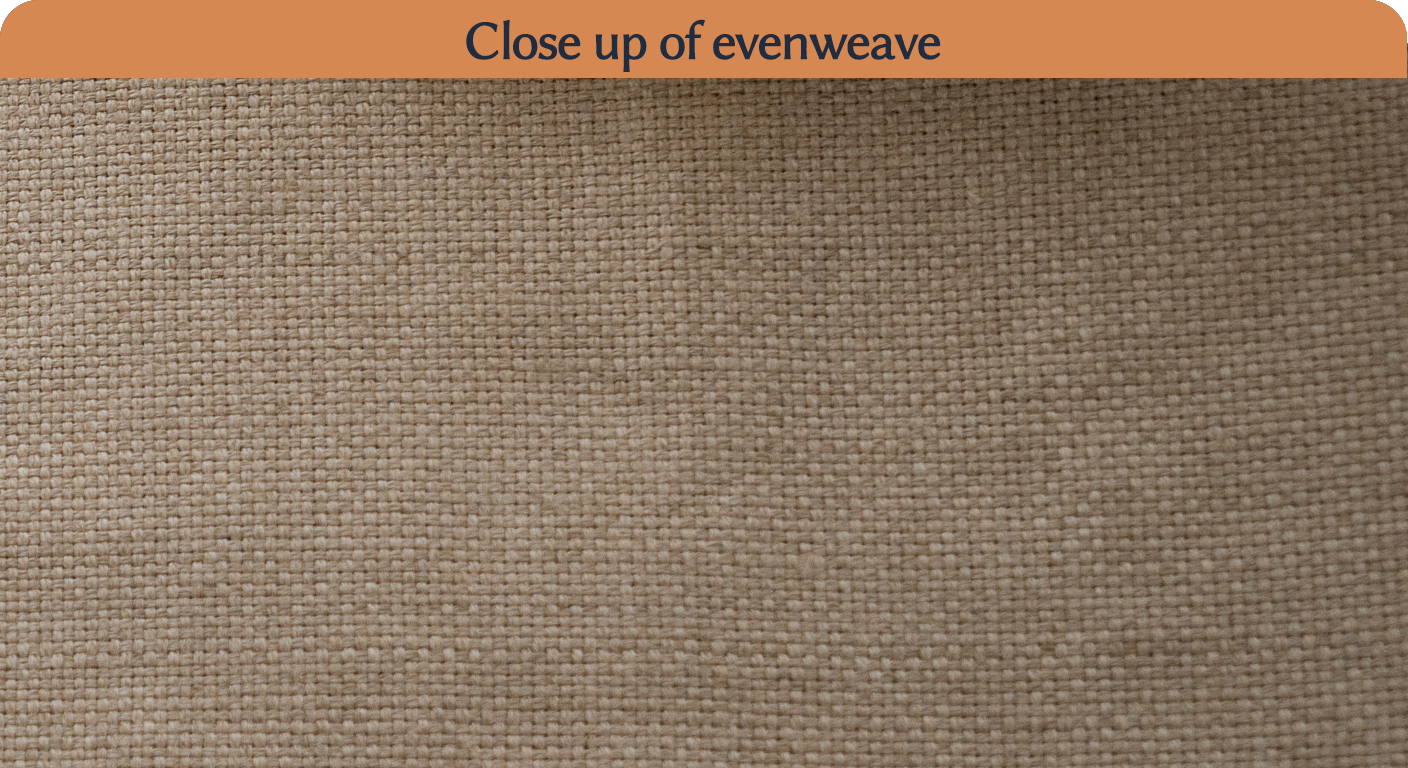
Evenweave is often described as "linen for people who want precision," and that's a fair description. It's woven from cotton or a cotton-linen blend, with threads of perfectly uniform thickness giving it the regularity that linen lacks. Like linen, evenweave is typically stitched over two threads. Unlike linen, it's easy to find your place because the weave is consistent from edge to edge.
©All Rights Reserved by Autmly, original image
The most popular evenweave for cross stitch is 28-count Jobelan and similar fabrics. Smooth, tightly woven, and available in a wide range of colors, this is the perfect choice for someone who wants to upgrade from Aida but is not ready for linen yet. The finished surface has an elegant, refined look: more delicate than Aida but less rustic than linen. It's particularly well-suited to realistic designs, fractional stitches, and any project where you want the fabric to recede and let the stitchwork be the star.
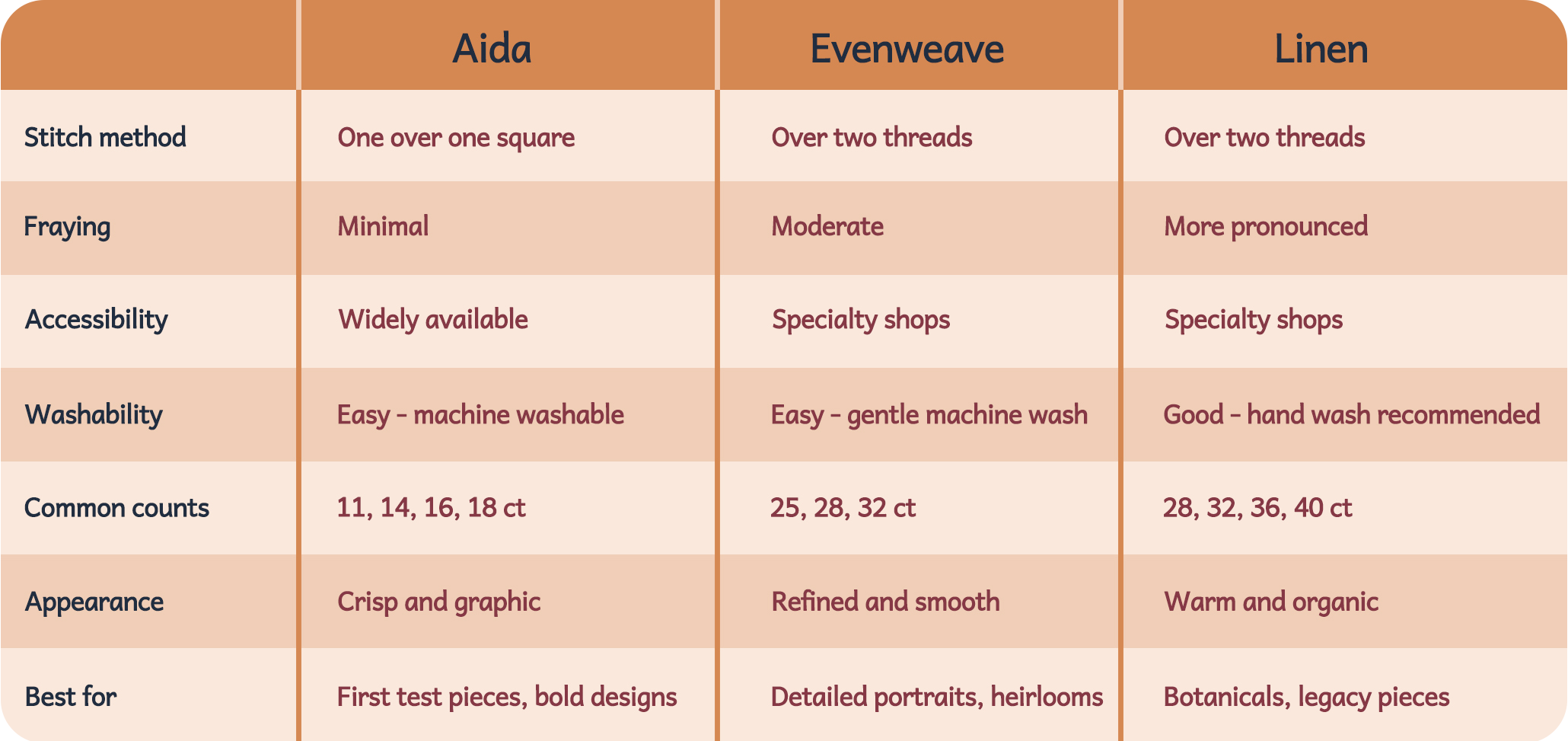
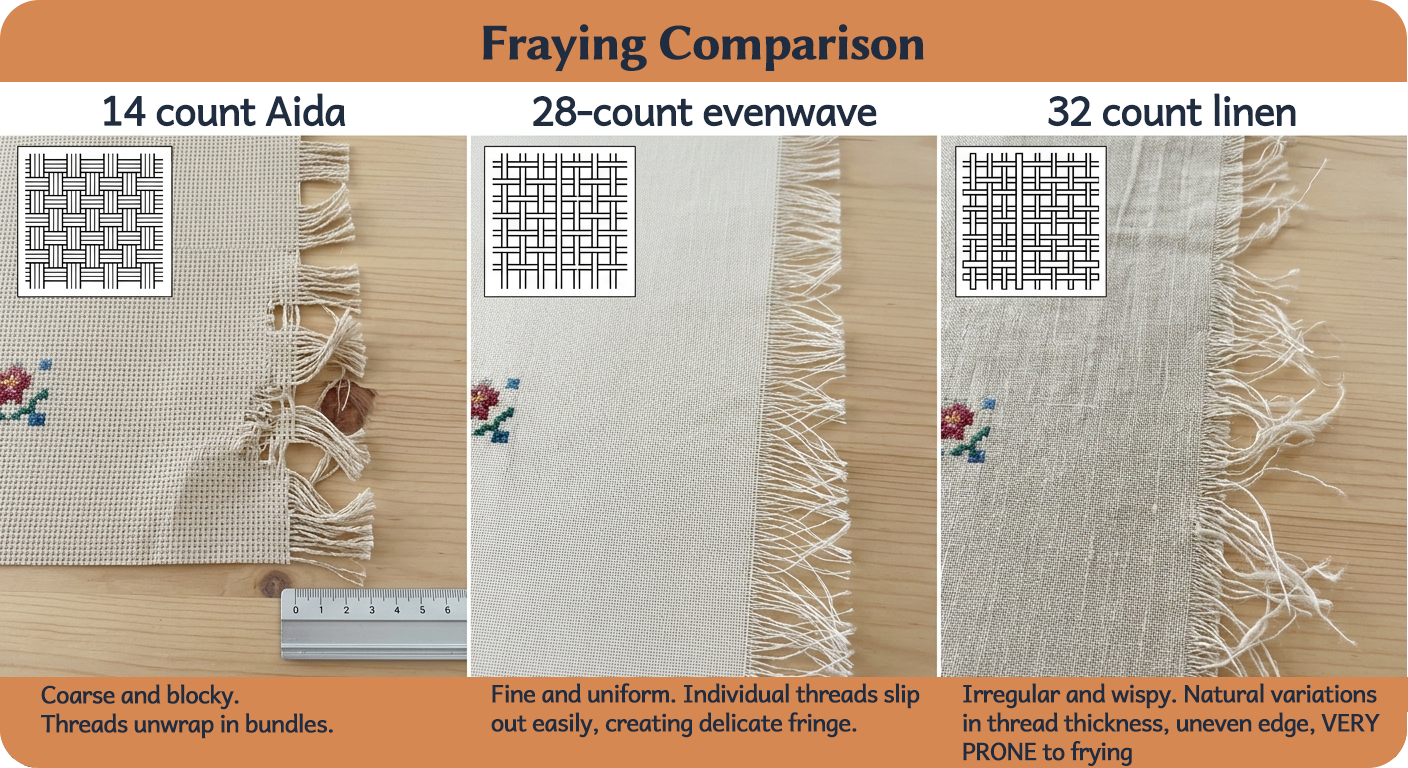
Head-to-head comparison
©All Rights Reserved by Autmly, original image
©All Rights Reserved by Autmly, original image
Which should you choose?
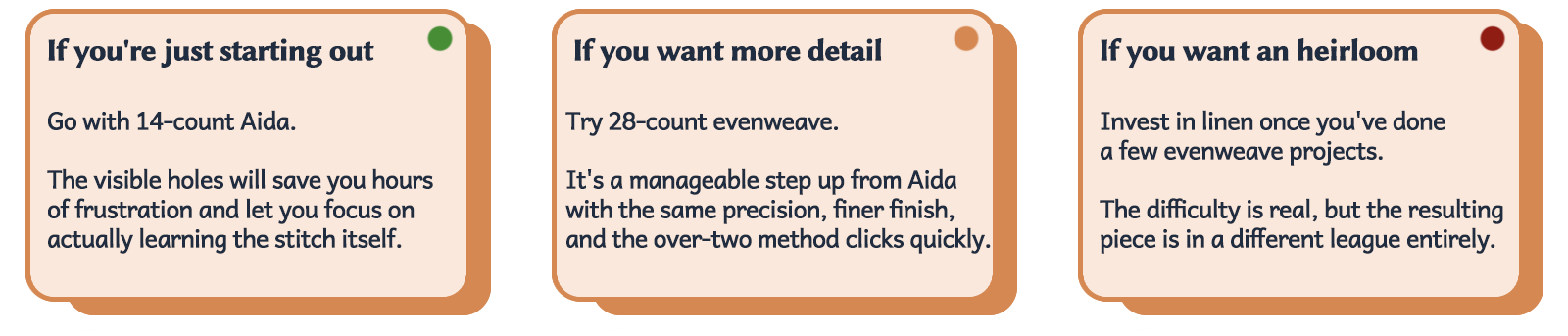
©All Rights Reserved by Autmly, original image
There's no wrong answer here, only the wrong fabric for the wrong moment. Many experienced stitchers keep all three in rotation, choosing based on the design, the intended recipient, and whether they want a relaxing evening project or a serious, months-long undertaking.
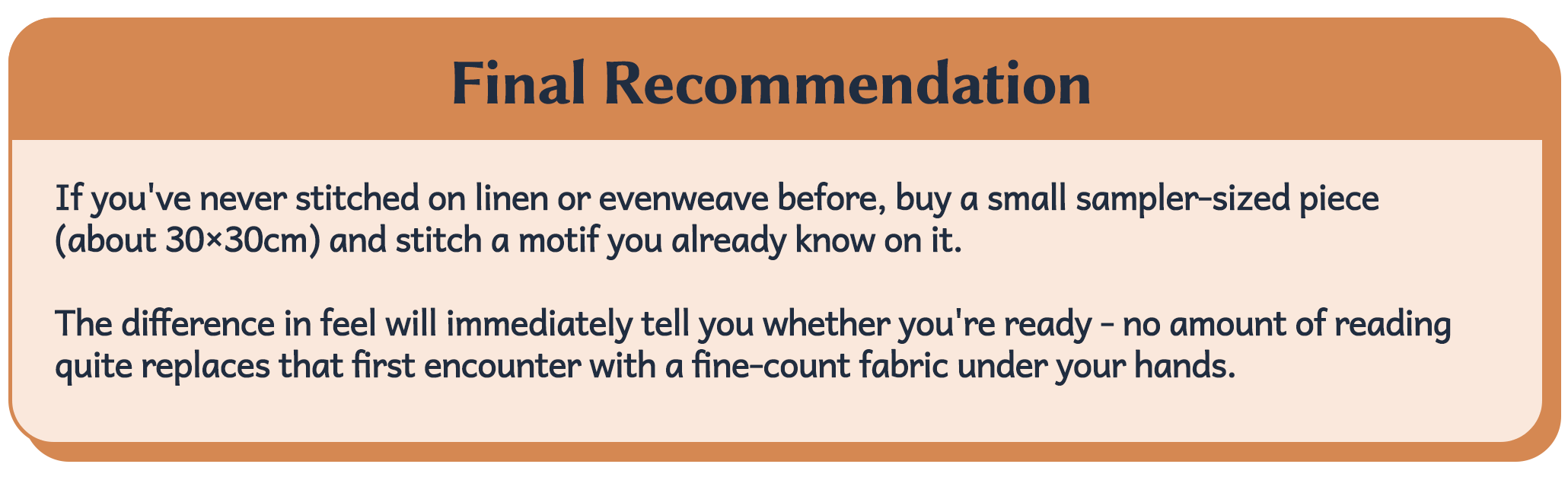
©All Rights Reserved by Autmly, original image