
©All Rights Reserved by Autmly, original image
I still remember the first time I decided to buy a pattern. Previously, all my cross stitching projects were from a whole kit, but I was looking for something different than what was available for me at the time. So I started browsing the internet for a design that I liked and was surprised to see how many options there actually were. A whole new world opened up to me and the variety kind of overwhelmed me to be honest. When I finally made my choice after many, many hours or browsing, I was actually very enthusiastic and couldn’t wait to start working on the design. But when I downloaded it and opened it, I quickly realized that enthusiasm does not always equal clarity. It turned out, the pattern was using only colors and no symbol at all! And three of the colors looked almost identical. I like the design and finished the project eventually, but it took a lot of squinting and second-guessing that could have been avoided entirely.
That experience taught me something I now think about every time I pick up a new pattern. A great design is not just about a pretty image. It is about everything that surrounds that image, and how well the whole package supports you as the person doing the stitching.
The Grid and the Count
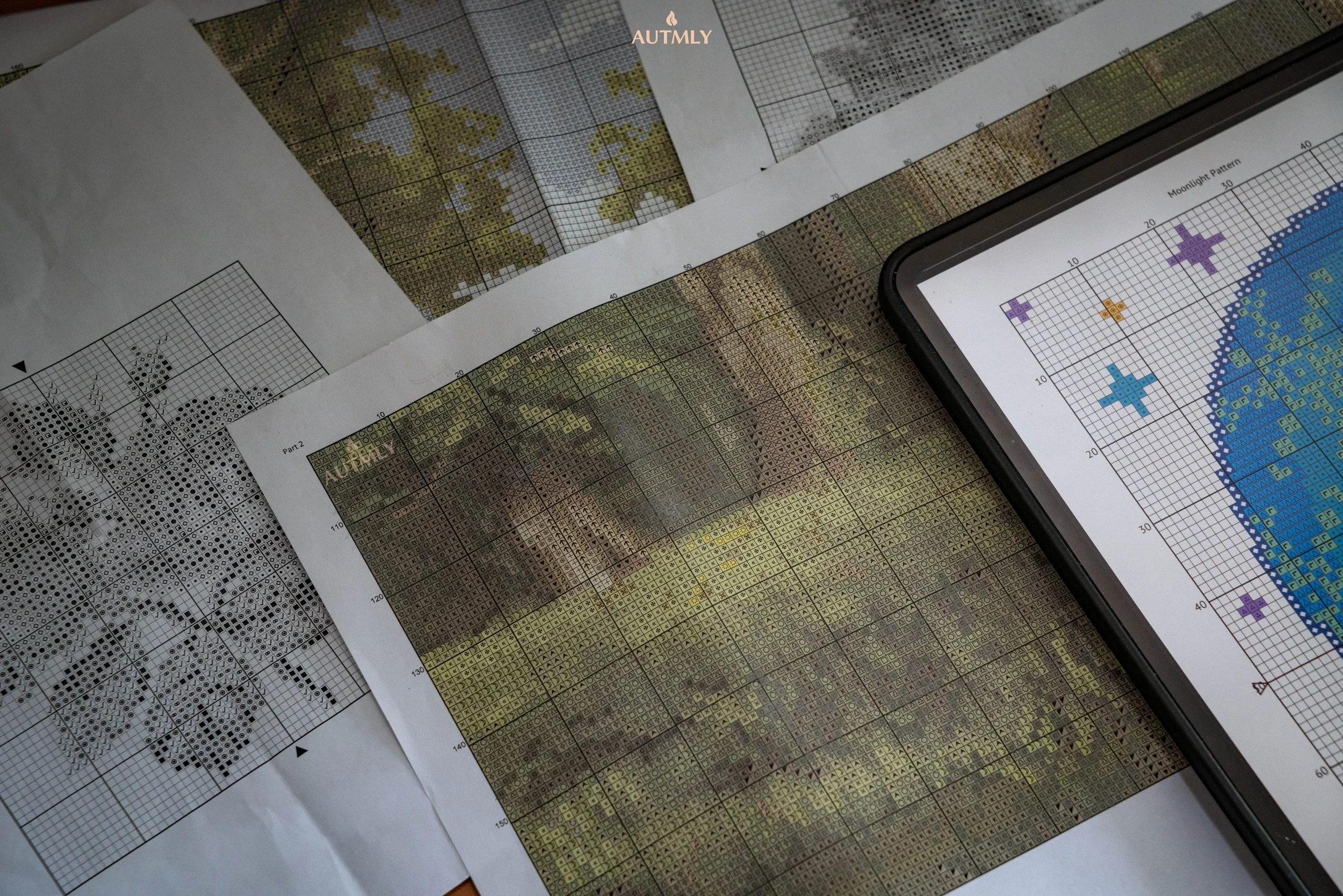
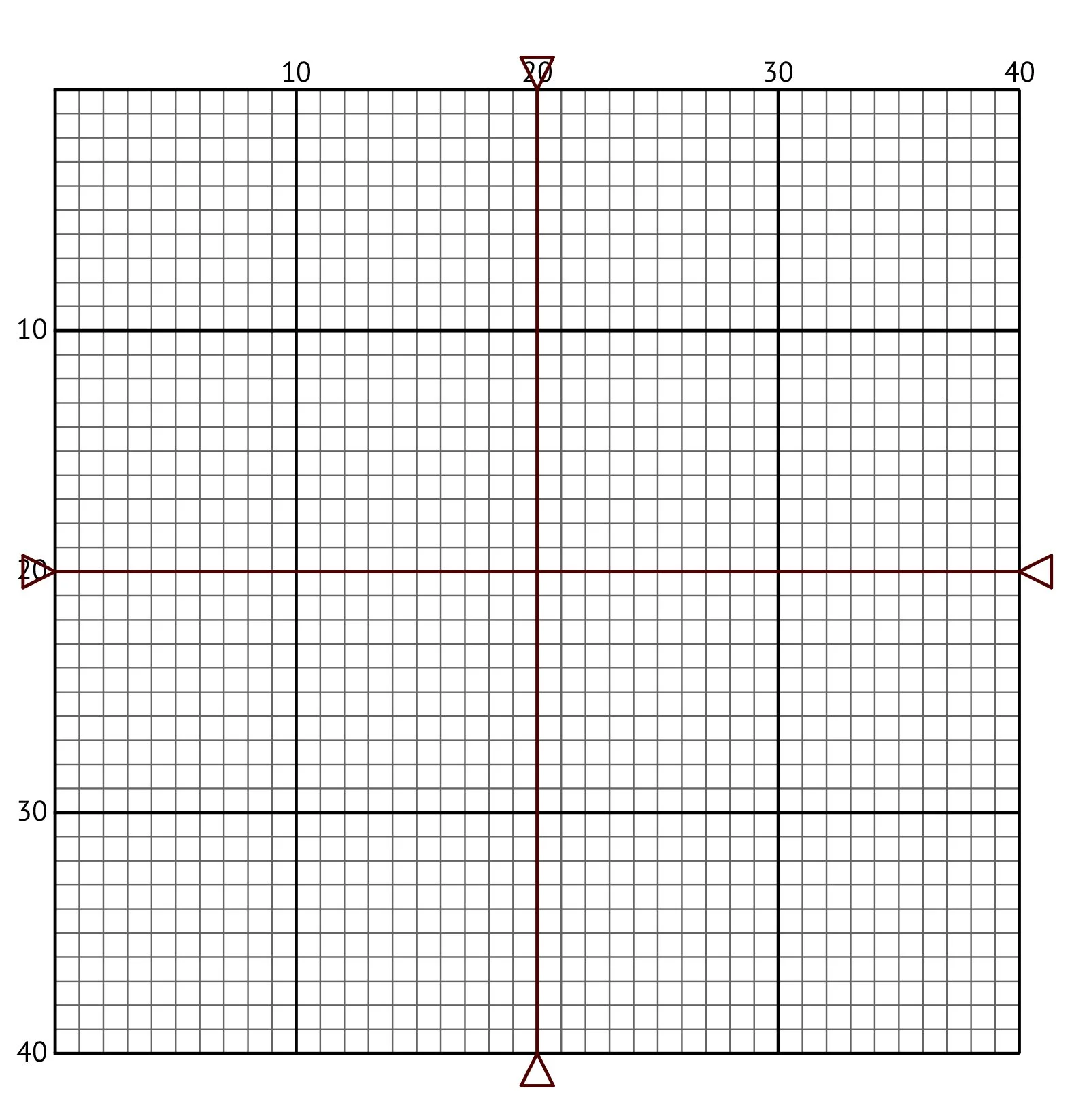
The foundation of any good pattern is a clean, readable grid. Every square on that grid represents one cross stitch, and if the grid is cramped, faint, or inconsistently spaced, you will lose your place constantly. A well-made pattern uses clear gridlines, often with bolder lines every ten squares to help you count and navigate. The fabric count recommendation should also be stated clearly, because the same design stitched on 14-count aida versus 18-count evenweave will produce very different results in size and detail.
©All Rights Reserved by Autmly, original image
A Colour Key That Actually Makes Sense
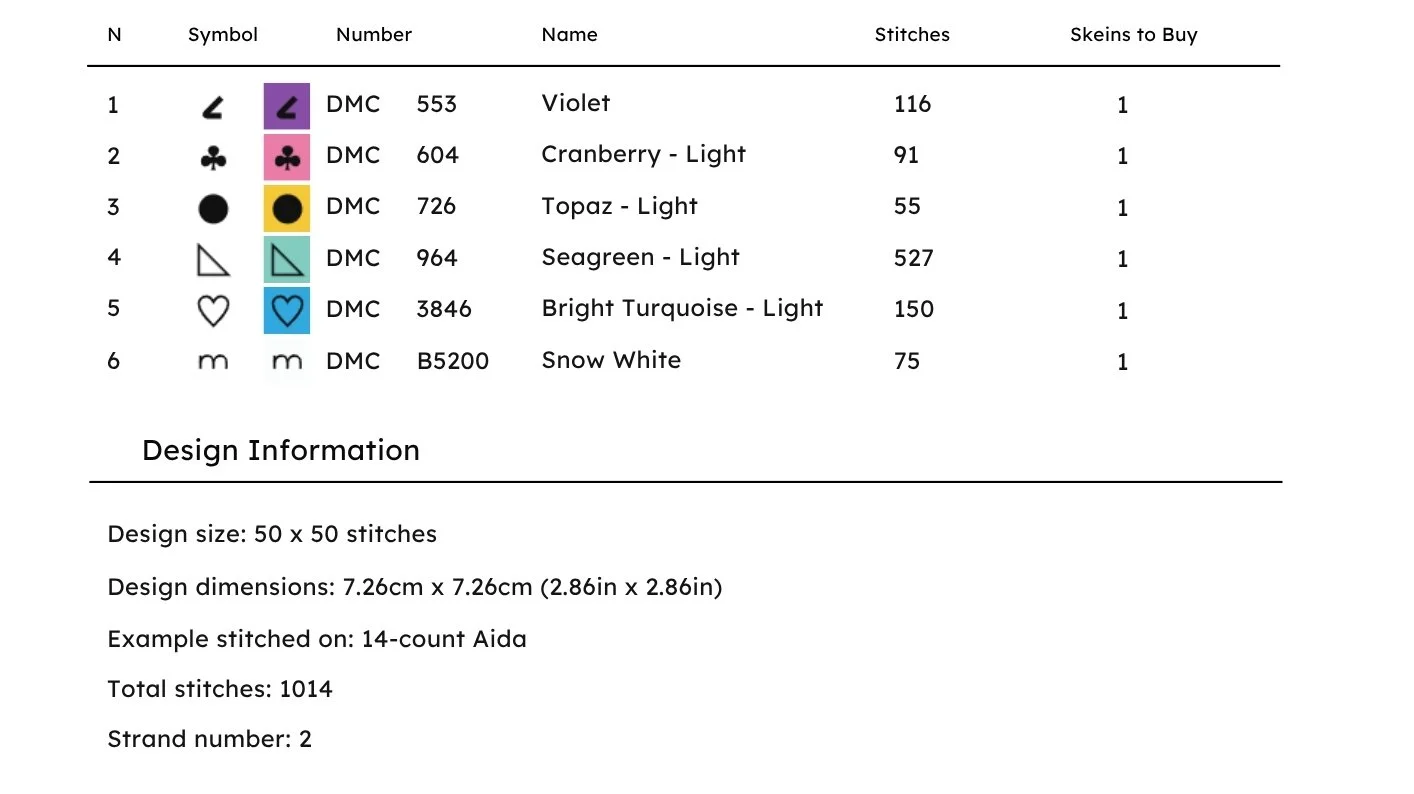
This is where so many patterns, even professionally made ones, fall short. A good colour key lists the thread brand, the specific colour number, and a clear symbol that is easy to distinguish from every other symbol in the chart. Symbols that look too similar, like a dot and a small circle, or a diagonal slash and a cross, cause real confusion when you are deep into a project. The best patterns use a generous variety of shapes and keep the palette manageable, especially for beginner-friendly designs.
It also helps when the colour names and numbers match what you can actually buy. Referring to a shade only as "dusty rose" without a DMC or Anchor number attached is not very helpful when you are standing in a craft shop trying to find it.
Stitch Count and Finished Size Information
A thoughtful pattern designer always tells you the total stitch count and the finished size at multiple fabric counts. This lets you decide before you even thread your needle whether the project suits the time you have, the fabric you own, and the frame or hoop you want to use. It sounds like a small thing, but it is genuinely one of those details that separates a carefully made pattern from one that was thrown together quickly.
©All Rights Reserved by Autmly, original image
The Problem With AI-Generated Patterns
This is something I feel I need to talk about honestly, because AI-generated cross stitch patterns are flooding the market right now, and many of them are genuinely problematic. One of the problems is that they look beautiful as previews and you can get scammed easily. They were not designed with care and actual stitching in mind, and that shows the moment you try to work with them.
AI-generated patterns often have color counts that are wildly impractical, sometimes running into the hundreds of shades for a small design. The grids can be inconsistent, the symbol keys can be missing or auto-generated without logic, and the stitch placement often creates shapes that look strange on fabric rather than clean and intentional.
There are a few things to look for if you want to spot an AI-generated pattern before you buy. First, check the color count. Any beginner or intermediate design that lists more than 30 or 40 colors is a red flag, because a human designer would simplify the palette. Second, look at the preview image closely. If it has some weird ombre gradations between stitches or triangles instead of only squares, be careful. Third, check the seller's shop. If they have uploaded hundreds of patterns in a very short time, that volume is almost impossible to achieve by hand. Fourth, look for missing or incomplete information, because a real designer will always include stitch count, fabric recommendations, and a proper color key. Another thing that is also good to consider is how many preview pictures there are. Not that they aren’t any good patterns that have only one image for a preview, but it’s better if you see a close up of the stitched pattern.
Buying from independent designers, small shops, and creators who share their process openly is always a safer bet, and it supports the people who are genuinely putting care into this craft.
What to Look For as a Beginner
If you are just starting out, the best patterns are the ones that do the most work for you. Look for designs with a small color count and a stitch count that is manageable for your first few projects. Anything under 3000 stitches is a great place to begin. A pattern that includes beginner notes or stitch guidance is a real bonus, and one that comes from a designer who is also a stitcher is worth its price every time.
The craft itself is slow and meditative and genuinely wonderful, and the right pattern makes it feel like a treat rather than a puzzle. You deserve that experience from the very first project.
I have some beginner friendly free patterns on the Resources page you can check out.
Happy stitching!
Follow me on Instagram @autmly_official