
Essential Tools For Cross Stitching
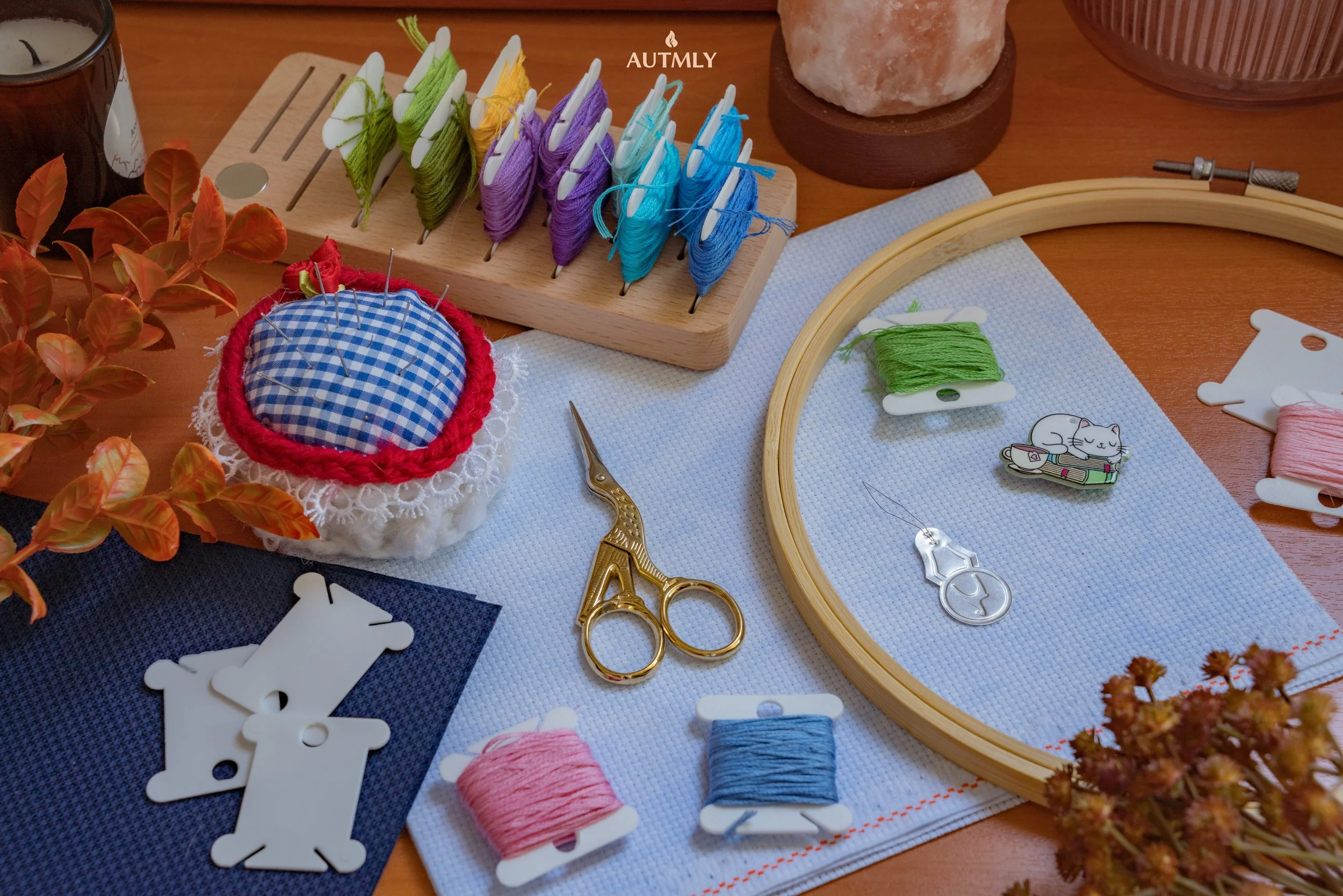
©All Rights Reserved by Autmly, original image
When I picked up my first cross stitch kit, I genuinely thought all I needed was a needle and some thread. So I began work and within about ten minutes I had a sore neck, a cramping hand, tangled mess of floss, and absolutely no idea what I was doing. Nobody had told me that half the battle of enjoying the process is simply having the right tools around you. Once I sorted that out, cross stitch went from frustrating to genuinely relaxing, and I want to save you that learning curve.
The good news is that you do not need a lot to get started, and most of what you do need is thankfully very affordable. But there is a difference between the tools that are truly essential and the ones that are lovely to have once you know you are committed. Let's start with the basics and work our way up.
Needles
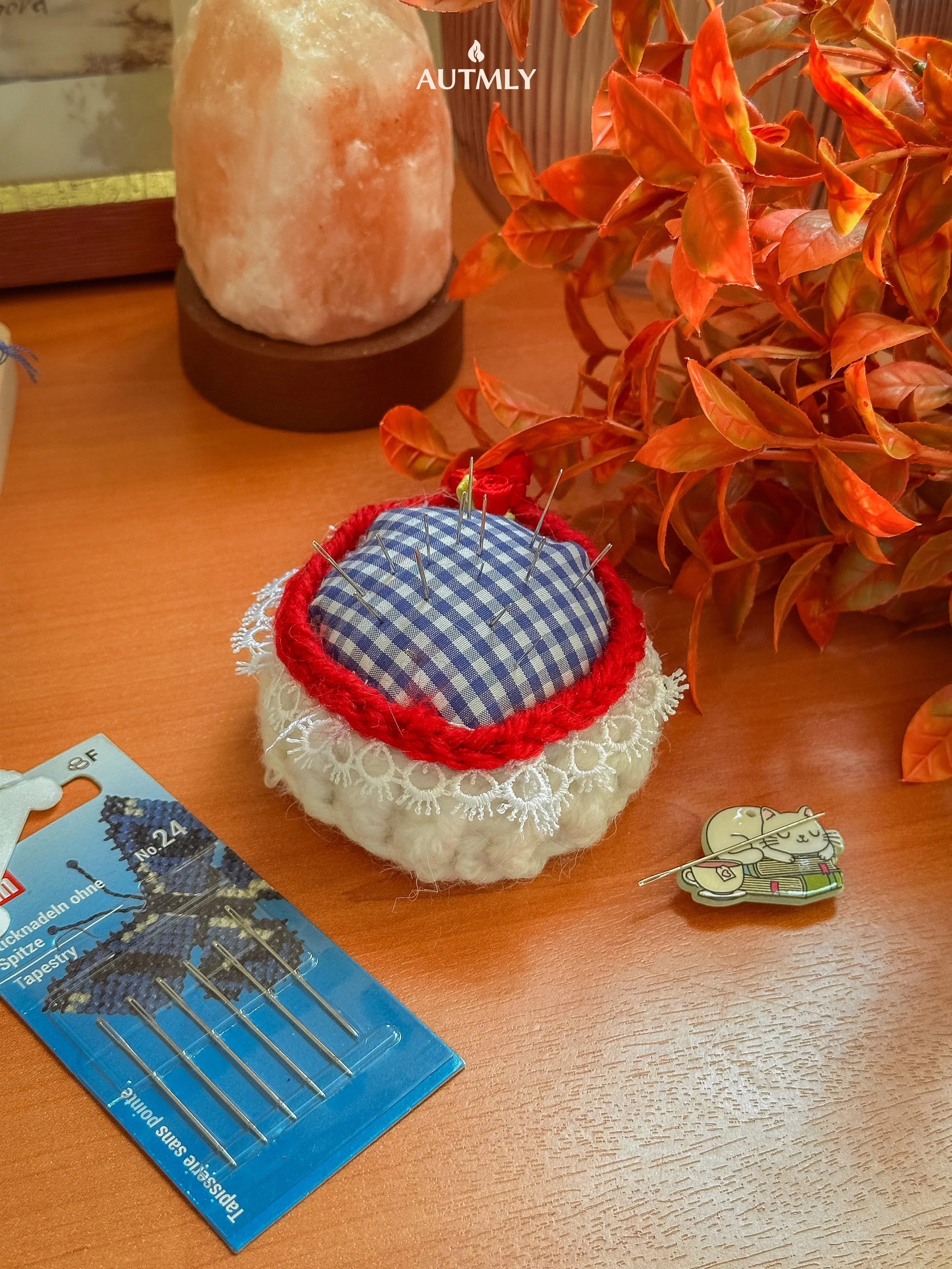
The humble tapestry needle is the foundation of everything. Unlike sewing needles, tapestry needles have a blunt tip and a large eye, which makes them easy to thread and kinder to your aida fabric since they pass between the weave rather than piercing through the threads. For most beginner projects on 14-count aida, a size 24 or 26 tapestry needle is your best friend. They are inexpensive enough that buying a small pack makes sense, because needles have a habit of disappearing into the void…..believe me.
You do not need anything fancy here. A basic pack of tapestry needles from any craft shop will carry you through dozens of projects, so this is absolutely a must-have from day one.
Hoops
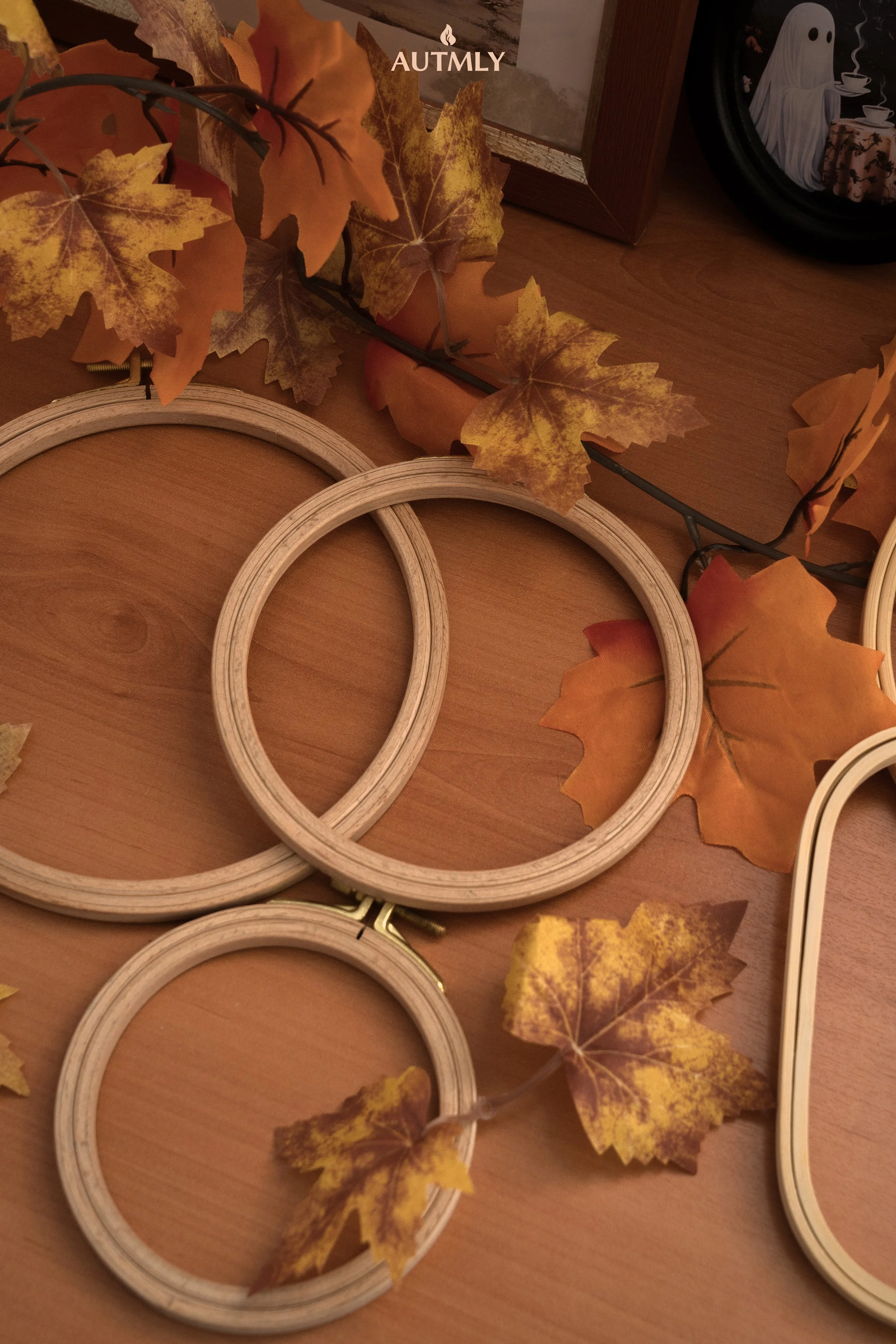
A hoop keeps your fabric taut while you stitch, which makes it so much easier to pull your needle through cleanly and keep your tension consistent. Without one, fabric tends to bunch and pucker, and your finished stitches end up uneven in a way that is hard to fix later.
For beginners, a simple wooden or plastic hoop in the 6 to 8 inch range is perfectly sufficient. They are cheap, widely available, and do the job well. As you progress, you might find yourself curious about scroll frames or Q-snaps, which hold larger pieces more evenly and do not leave hoop marks on your fabric. Those are genuinely nice to have but not something you need to think about until you are ready for bigger projects.
Scissors
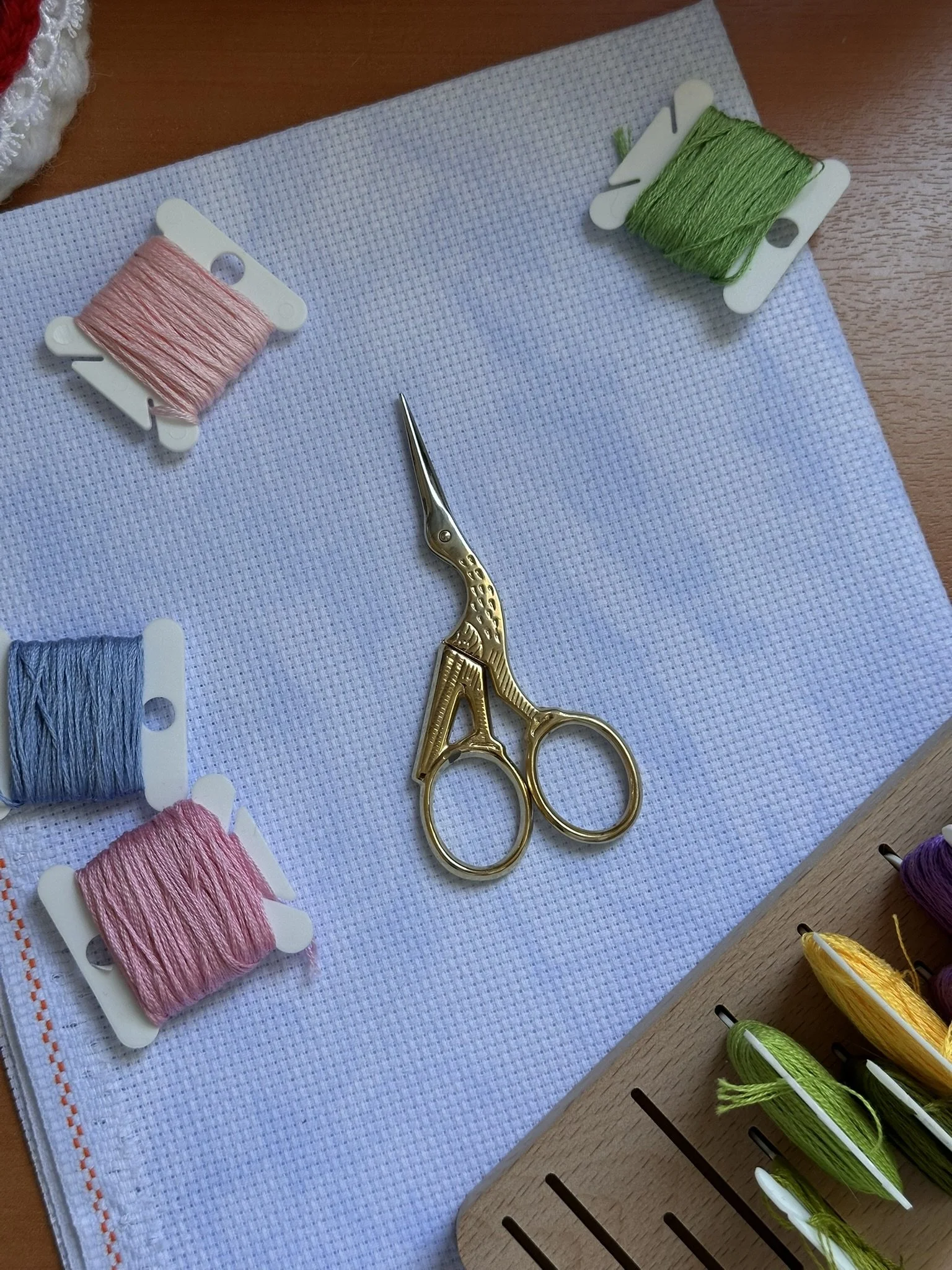
Do not underestimate how much a good pair of small embroidery scissors matters. You want something sharp enough to snip thread close to the fabric without fraying or dragging, and small enough to be precise. Those tiny stork-shaped scissors you see everywhere are not just pretty, they are actually very practical for this purpose.
A standard pair of household scissors will technically work, but you will notice the difference immediately when you try to make a clean cut near your stitching. Small, sharp embroidery scissors are one of those purchases that costs very little and makes the whole experience noticeably better, so I would put them in the essential category even for beginners.
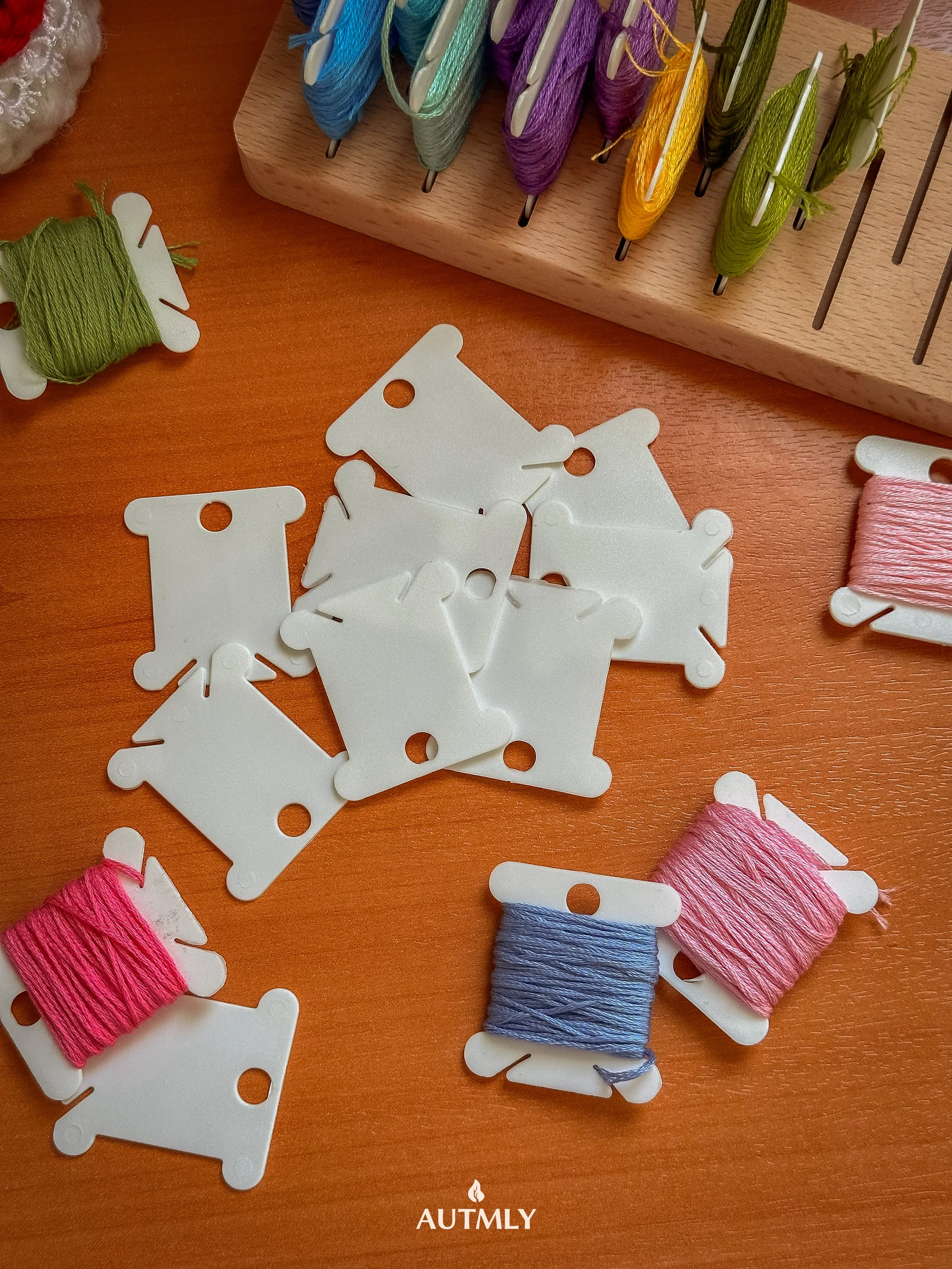
Thread Organisers
Embroidery floss is sold in skeins, which are those little bundles of six-strand thread that tangle at the slightest provocation. If you are working from a kit or building up your own color collection, getting some kind of organisation system in place early will save you a lot of frustration.
The simplest solution is plastic bobbins. You wind your floss around them, label each one with the DMC color number, and store them in a small box or ring. It takes a little time to set up, but once you have it, finding the right color mid-project is satisfying rather than stressful.
This is technically a nice-to-have for someone working through a single kit, since everything usually comes pre-cut, but if you plan to buy your own floss and mix colors, bobbins become essential quite quickly.
Worth Knowing About, But Don’t Need to Buy Yet
There is a whole world of accessories for cross stitch and while they are wonderful, some of them don’t belong in a beginner's basket in my opinion. Hoop stands, for instance. They free up both your hands while you stitch and are genuinely useful once you are working on larger pieces or longer sessions, but they are not an urgent purchase. The same goes for clip-on magnifier lights and neck lights, which help enormously with fine detail and dark thread colors. But if you’re just starting out and not stitching in the middle of the night (of which I’m guilty as charged 👉👈) I definitely wouldn’t add them to my Wishlist just yet. Same for dedicated project bags or travel cases that keep your work-in-progress neat and portable. These things become meaningful investments once you know that cross stitch has well and truly got its hooks into you, and investing in them at that point feels like a reward rather than a gamble. For now, the basics will do just fine.
Starting Simple
So, let’s summarize. If you are brand new to cross stitch and want to know the absolute minimum to get going, start with a pack of tapestry needles, a small wooden hoop, and a pair of embroidery scissors. Those three things, combined with your fabric and floss, are genuinely all you need to stitch your first project. Everything else can come gradually as your collection grows and your enthusiasm deepens.
Cross stitch is one of those crafts that rewards you for keeping things simple, especially at the beginning. The joy is in the stitching itself, and having a few good tools makes it so much easier to fall in love with the process.
If you’re thinking about starting cross stitch but don’t know where to start, visit the Resources section for free guides, printables and patterns!