
Forest Bathing: The Japanese Practice of Shinrin-Yoku
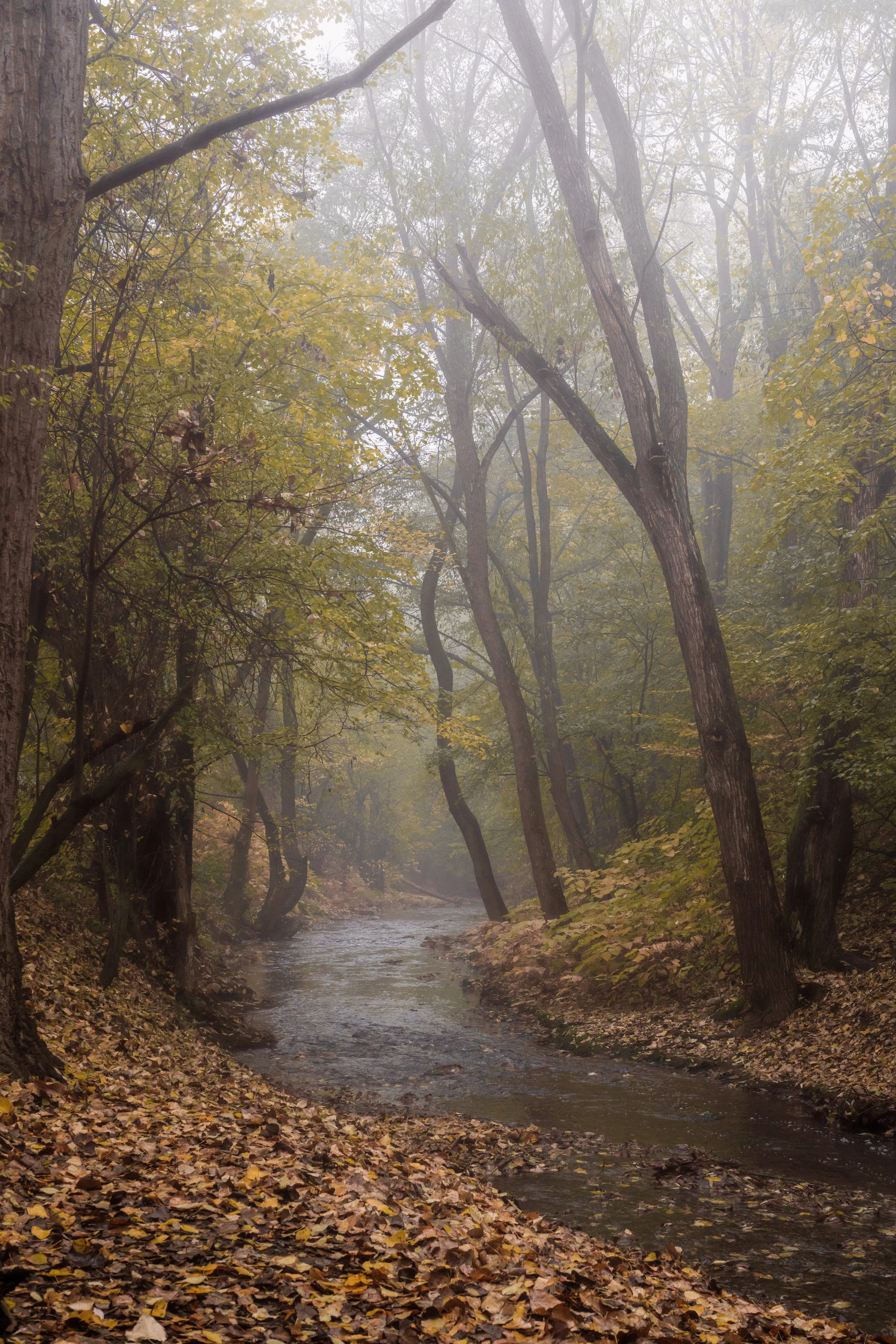
In the early 1980s Japan’s Ministry of Agriculture, Forestry and Fisheries introduced Shinrin-Yoku for the first time. The term literally means “forest bathing” and it was a national health program for countering high stress levels and increasing urbanization.
The practice itself is not just a simple walk in the woods. Shinrin-Yoku is about immersing yourself with all senses: noticing the scent of trees, the sound of wind in the leaves, the patterns of light, and the feeling of slowing down.
It’s a mindful, present-moment connection with the forest environment and science has finally caught up to what our ancestors always knew: spending mindful time among trees is medicine for both body and soul. Over the past decades it has grown into a research field known as Forest Medicine, studying how natural environments influence physical and psychological health.
The Science Behind Shinrin-Yoku
Unlike hiking or jogging, forest bathing isn't about reaching a destination or burning calories. It's about being present. It's about moving slowly through the woods, engaging all five senses, and allowing the forest to work its quiet magic on your nervous system.
You might wonder if simply being among trees can really improve our health. The answer, according to decades of research, is a resounding yes. A large body of scientific studies now support the benefits of forest bathing and here are some of the most compelling findings:
Stress Reduction - Research has consistently shown that time in forest environments lowers cortisol levels, reduces blood pressure, and decreases pulse rate. In a comprehensive review of 28 studies, researchers found that forest bathing promotes greater parasympathetic nerve activity (our "rest and digest" mode) and lower sympathetic nerve activity (our "fight or flight" response) compared to urban environments. Follow-up studies show that both dynamic forest bathing (slow walking) and static forest bathing (sitting or resting in nature) produce measurable relaxation responses.
Heart-Health Improvements - Another review and analysis of 20 clinical trials (732 participants) found that time in forest environments consistently reduces both systolic and diastolic blood pressure. Some additional reviews also suggest benefits for heart-rate variability, circulation, and improved markers of metabolic health.
Immune System Boost - Studies conducted across 24 forests in Japan found that forest bathing significantly increases the activity of the white blood cells that help our bodies fight viruses and even cancer. One study showed that the increased cell activity lasted for up to 30 days after a single forest bathing trip. This immune-boosting effect is partly attributed to phytoncides, natural compounds released by trees into the air, which we inhale as we walk.
Improved Mood, Sleep and Focus - Shinrin-Yoku is particularly effective in reducing anxiety symptoms. Studies have documented improvements in mood and decreased scores for depression, anger, fatigue, and confusion. The calming effects of forest bathing extend beyond the walk itself. Regular practitioners report improved sleep quality and better concentration. The practice aligns with Attention Restoration Theory, which suggests that natural environments help restore our depleted attention capacity through what researchers call "soft fascination"

How to Practice Shinrin-Yoku
The beauty of forest bathing is its simplicity. You don't need special equipment, extensive training, or even a dense wilderness.
Find your forest
While an old-growth forest away from city noise is ideal, you can practice Shinrin-Yoku in any green space with trees like a local park, a nature preserve, even a tree-lined neighborhood street. The key is finding somewhere you can feel relatively removed from the rush of daily life, even if it's just for a short while.
Leave your phone behind
Disconnecting from the digital world is central. Research shows the calming effect is strongest when attention is undivided.
Slow down or don’t move at all
This is perhaps the most important aspect of Shinrin-Yoku. Move through the forest slowly and take deliberate steps, paying attention to each one. Alternatively, you can just sit quietly while absorbing the sights and sensations around you. Choose what feels natural that day.
Engage all senses
Listen to rustling leaves, notice the scents of the foliage, observe shapes and light patterns, touch bark or moss. Sensory immersion activates the nervous system in ways tied to stress reduction.
Practice gratitude
Before you leave, take a moment to express gratitude for the forest and the peace it has offered you. This simple act of acknowledgment deepens your connection to nature and can help extend the benefits of your practice.
Aim for regularity
While a single session helps, reviews recommend repeat exposure. Weekly or bi-weekly sessions seem ideal for long-term benefits but don't make it feel like a chore you have to find time for. Start with whatever feels manageable.
Not everyone has easy access to forests, and that's okay. The principles of Shinrin-Yoku can be adapted to whatever nature is available to you. Gardening, tending houseplants, sitting mindfully in your backyard, placing your hands on a single tree in a city park - all of these can help you cultivate that crucial connection with the natural world.
Why Forest Bathing Matters
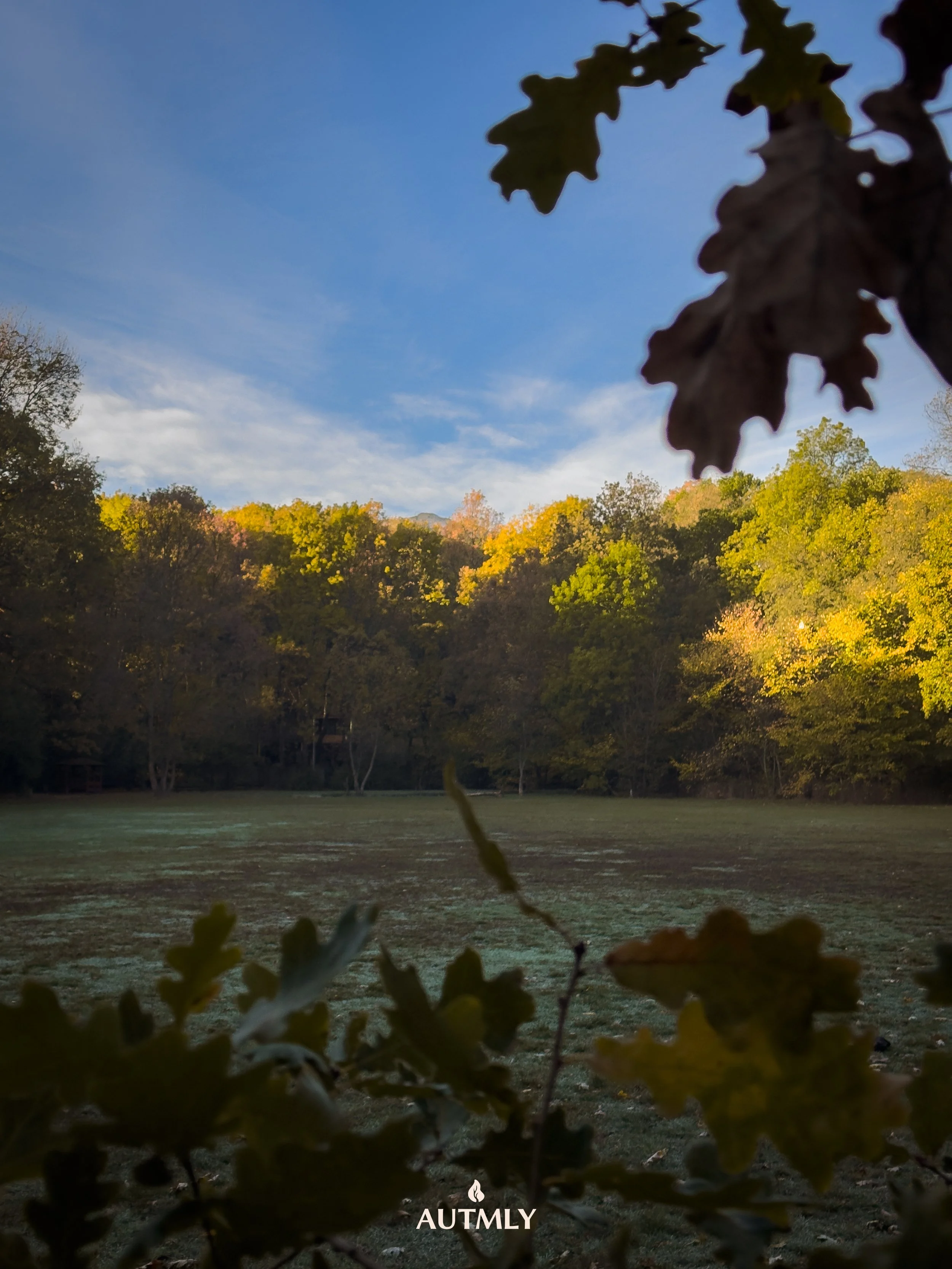
Why Forest Bathing Matters
In our increasingly digital, fast-paced world, we've become disconnected from something essential. We spend our days indoors, our attention fragmented by screens, our nervous systems constantly activated by the demands of modern life. We've forgotten that we are, at our core, creatures of the natural world.
The forest has always been there, patiently waiting. It asks nothing of us except that we show up and be present. In return, it offers us something we desperately need: peace, restoration, and a gentle reminder that we are home.
Forest bathing isn’t a replacement for medical care of course, but it’s a meaningful preventive wellness practice. It helps recalibrate the nervous system, increases resilience, supports cardiovascular and immune health, and reconnects us with a way of being that humans evolved for.
So this week, I invite you to try it. Find your patch of green, leave your phone behind, and simply be among the trees. Let the forest in, and notice what inside you. You might be surprised by what you discover.
Thank you for reading and I hope I see you next time. 🍂
Keep your heart cozy - no matter the season.
——————————————————————————
Sources for this article:
Environmental Health and Preventive Medicine (2019). "Medical empirical research on forest bathing (Shinrin-yoku): a systematic review."
https://environhealthprevmed.biomedcentral.com/articles/10.1186/s12199-019-0822-8
2. Li, Q. (2022). "Effects of forest environment (Shinrin-yoku/Forest bathing) on health promotion and disease prevention—the Establishment of 'Forest Medicine.'" PMC.
https://pmc.ncbi.nlm.nih.gov/articles/PMC9665958/
3. Hansen, M. M., Jones, R., & Tocchini, K. (2017). "Shinrin-Yoku (Forest Bathing) and Nature Therapy: A State-of-the-Art Review." PMC.
https://pmc.ncbi.nlm.nih.gov/articles/PMC5580555/
4. International Journal of Mental Health and Addiction (2020). "Effects of Shinrin-Yoku (Forest Bathing) and Nature Therapy on Mental Health: a Systematic Review and Meta-analysis."
https://link.springer.com/article/10.1007/s11469-020-00363-4
5. PubMed (2009). "The physiological effects of Shinrin-yoku (taking in the forest atmosphere or forest bathing): evidence from field experiments in 24 forests across Japan."
https://pubmed.ncbi.nlm.nih.gov/19568835/
6. PMC (2024). "Shinrin-Yoku 森林浴 (Forest Bathing): A Scopin